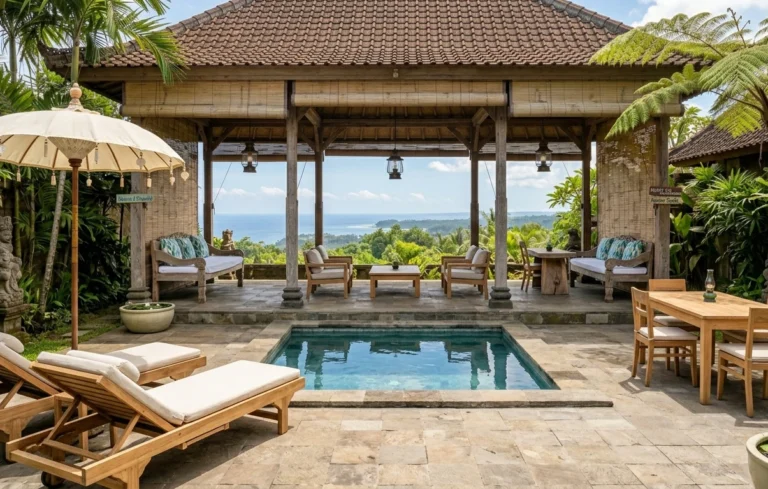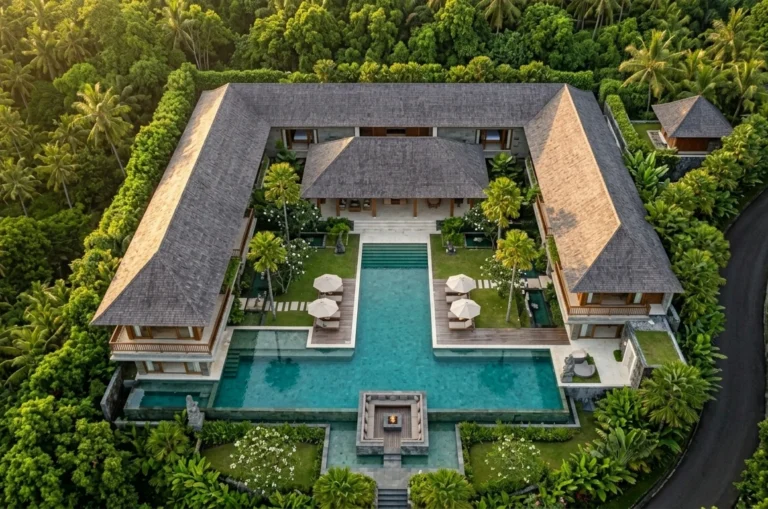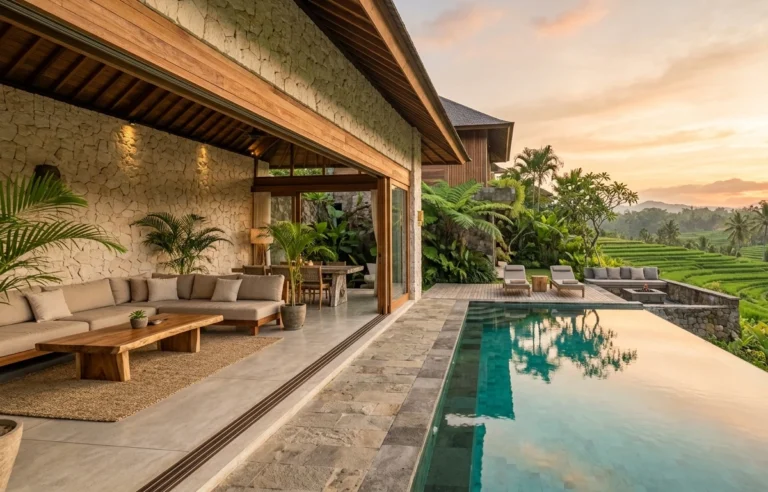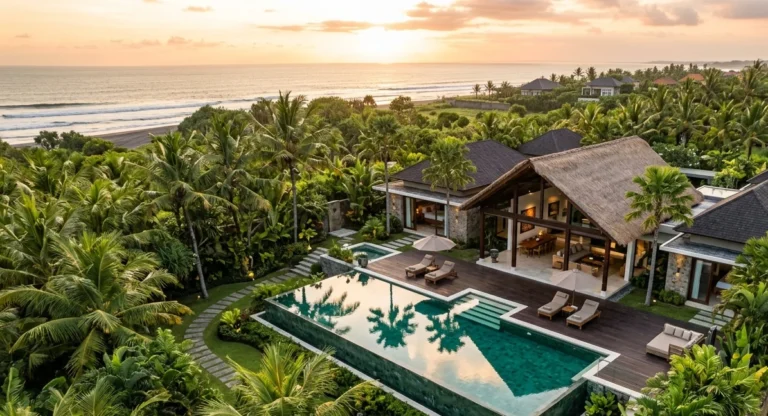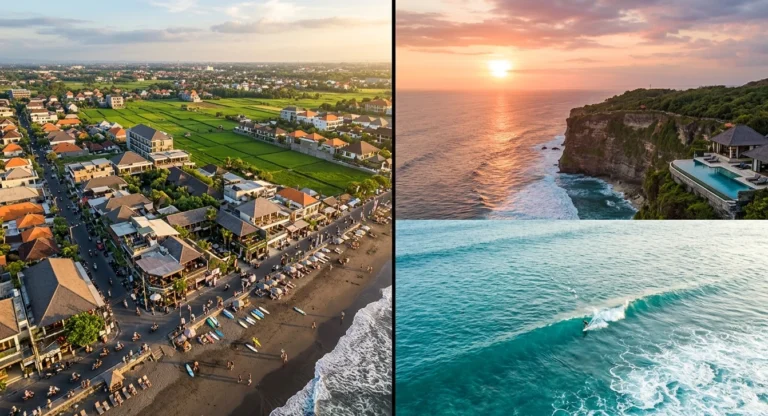



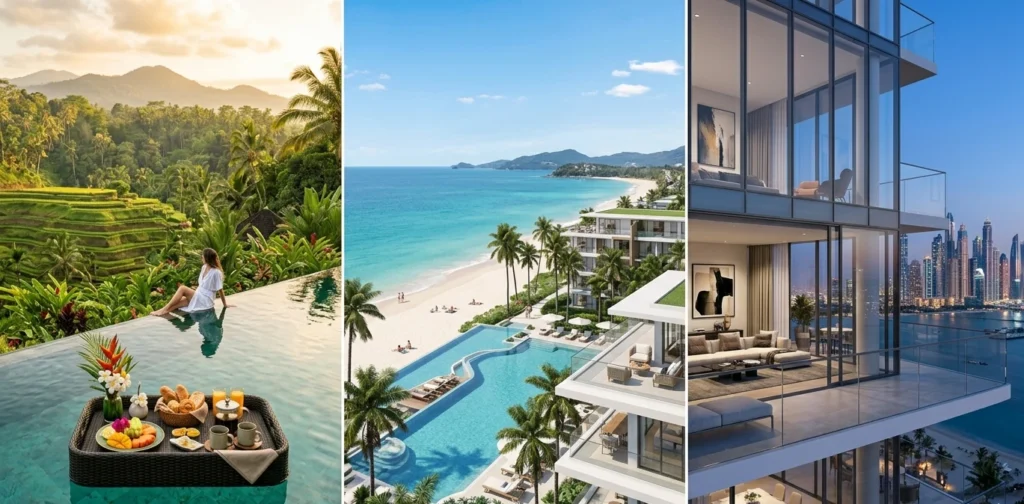
Quick Answer: For foreign investors in 2026, the right market depends entirely on your primary objective. Bali delivers the highest gross rental yields (8–12%) and the lowest entry price for luxury villa products, but land ownership for foreigners is leasehold-only and construction quality risk is real. Phuket offers foreign freehold ownership (condominiums), institutional developer credibility, and a more regulated environment at slightly lower yields (7–10%). Dubai wins on tax efficiency, legal transparency, and resale liquidity, but is a fundamentally different investment product (high-rise apartments vs. tropical villas) at a higher entry price. All three can be profitable, they serve different investor profiles.
The 2026 Investment Landscape: What Has Actually Changed
The global property investment conversation in 2026 has shifted meaningfully from where it stood two years ago. Three developments have reshaped how sophisticated foreign buyers approach tropical and resort markets.
First, Portugal’s Golden Visa real estate route closed in October 2023, and Spain’s program was phased down through 2024–2025. This redirected a meaningful volume of European capital, particularly from buyers seeking residency alongside yield, toward markets outside the EU. Bali, Phuket, and Dubai have all seen increased European buyer inquiry as a result.
Second, Indonesia’s PPN-DTP incentive (PMK 90/2025) materially reduced closing costs for properties under IDR 5 billion, lowering the all-in entry cost for Bali villa investment specifically. This is a 2025–2026 window that has not yet been widely publicized in the international investment media.
Third, Dubai’s market has entered what analysts describe as a supply-heavy normalization phase after two years of record delivery volume. Gross yields in the mid-tier apartment segment have compressed noticeably, shifting conversations toward the question of whether the tropical villa markets, Bali and Phuket specifically, offer a more defensible yield profile.
This is the context in which the Bali vs. Phuket vs. Dubai comparison deserves to be evaluated in 2026.
Market-by-Market Analysis
Bali, Indonesia: The Highest-Yield Tropical Villa Market
Bali’s position in the global resort property market in 2026 is that of a high-yield, high-involvement, high-differentiation investment. The island received approximately 6 million international visitors annually pre-COVID and has returned to strong tourism flows, with the digital nomad and wellness travel segments adding year-round demand that traditional beach tourism markets lack.
For a full breakdown of which Bali zones offer the strongest rental yield, see our analysis at Top Locations for Profitable Villas in Bali.
The critical caveat for Bali is one that every honest advisor must state clearly: foreigners cannot own land freehold in Indonesia. The two primary legal structures available are Hak Sewa (leasehold, typically 25–30 years with renewal options) and Hak Pakai (Right to Use), the latter available to individual foreigners who hold a valid Indonesian residency permit. Both are legally valid and used by tens of thousands of foreign investors, but they are not freehold, and lease renewals carry risk that must be assessed with a qualified Indonesian notaris before committing capital. For a complete explanation of these structures, see our guide Leasehold vs. Freehold in Bali.
Phuket, Thailand: Structural Stability and Freehold Access
Phuket is the most direct like-for-like comparison for Bali: a tropical island, tourism-driven rental economy, similar entry price range for mid-market products, and a foreign buyer community with comparable composition.
Where Phuket leads Bali in a material way is ownership structure. The Thai Condominium Act allows foreigners to own condominium units in freehold (up to 49% of a building’s total unit area), with a government-issued Chanote title deed, genuine, inheritable ownership with no leasehold clock running. For villa buyers, the standard structure is a 30+30+30 year leasehold registered at the Land Department, which has been used securely by tens of thousands of foreign villa owners. This is more institutionally credible than Bali’s leasehold model for investors who prioritize ownership certainty.
Phuket International Airport connectivity is broadly comparable to Bali’s Ngurah Rai, serving direct routes from major European, Australian, and Asian hubs, which is a meaningful advantage over more remote tropical markets.
Dubai, UAE: A Fundamentally Different Investment Thesis
Dubai is not directly comparable to Bali or Phuket, and framing it as such creates confusion. It is a different product, a different investor profile, and a different set of trade-offs.
Dubai’s structural advantages are real and significant: true freehold ownership for foreigners in designated zones with a formal government title deed (no leasehold structures, no nominee arrangements), zero personal income tax on rental income, zero capital gains tax on property held personally, and a DLD (Dubai Land Department) transfer fee of 4% that is fixed, transparent, and predictable. For investors with capital in markets with complex tax environments, Dubai’s tax efficiency is a genuine differentiator.
The investors for whom Dubai genuinely makes sense in 2026 are those prioritizing capital preservation, liquidity (Dubai’s secondary market is significantly more liquid than either Bali or Phuket), tax efficiency, and metropolitan lifestyle infrastructure, not those seeking tropical resort experience or maximum rental yield.
Ownership Structures: What Foreign Investors Actually Own
This is the section that most online comparison articles treat superficially. The legal structures are not a footnote, they are the foundation of your entire investment.
Bali / Indonesia does not allow foreigners to directly own SHM (freehold title), so investors typically use Hak Sewa (leasehold), Hak Pakai, or a PT PMA company structure, each with different legal and compliance requirements. A key risk in Bali is the enforceability of lease renewal clauses if the land changes ownership, making strong due diligence essential. For more details, see our guide Bali Property Development: Navigating Zoning Laws.
Phuket / Thailand offers foreigners full freehold ownership of condominiums up to 49% of total building area, while villas are usually held under 30+30+30 year leasehold structures, where renewal rights may not always be fully enforceable.
Dubai / UAE provides the strongest ownership security, with full freehold rights in designated zones, government-issued title deeds, recognized inheritance rights, and no lease expiry risk.
Yield, Tax, and Net Return: The Honest Numbers
Gross yield numbers are easy to cite and easy to misuse. The number that actually determines whether your investment performs is net yield after all costs, management fees, taxes, maintenance, and vacancy.
| Market | Gross Yield (2026) | Typical Net Yield | Income Tax (Local) | CGT (Local) | Management Model |
| Bali | 10–15% (cost basis) / 8–12% (market value) | 6–10% | ~10% (treaty-dependent) | 25% (on gain) | Villa management company |
| Phuket | 7–12% | 5–8% | 15% withholding | 0% | Hotel operator / management company |
| Dubai | 6–9% | 4–7% | 0% | 0% | Building management / rental management |
Note: Tax treatment depends on individual circumstances, residency status, and applicable tax treaties. Consult a qualified tax adviser in your home jurisdiction before making investment decisions.
Entry Price, Transaction Costs, and Hidden Fees
For a comparable 2–3 bedroom private villa/apartment unit in a prime location targeting short-term rental:
Bali entry starts from approximately $130,000–$180,000 USD for smaller villa units in emerging corridors, with premium 2-bedroom pool villas in Canggu or Uluwatu typically priced at $300,000–$600,000 USD. Three-bedroom luxury villas above $600,000 USD are available and represent the upper end of the high-yield market.
Phuket’s comparable entry for a 2-bedroom resort condo with pool access starts from approximately $150,000–$250,000 USD, with villa product in Bang Tao and Layan generally from $400,000–$800,000 USD.
Dubai’s 2-bedroom apartment entry in investable zones (Dubai Marina, Business Bay, JVC) starts from approximately $300,000–$500,000 USD, with the majority of institutional-grade new supply above $500,000 USD.
Bali’s transaction costs include notarial fees (typically 1–2% of the transaction value), land and building acquisition duty (BPHTB, 5% of taxable acquisition value), and applicable income tax on the seller side (typically passed on in pricing). The Indonesian government’s 2025 PPN-DTP incentive (PMK 90/2025) reduces VAT obligations for eligible primary-market purchases under IDR 5 billion, a meaningful cost saving that is currently a time-limited window.
Phuket’s transfer fee is 2% of assessed value, specific business tax 3.3% (if sold within 5 years) or stamp duty 0.5%, and legal fees of approximately 0.5–1%. Total closing costs on purchase typically land at 3–6% of transaction value.
Dubai charges a fixed DLD transfer fee of 4% of purchase price, transparent, predictable, and lower than many comparable markets. Additional costs include agency fees (2% is standard), registration fees, and mortgage registration if applicable.
The Construction Quality Variable: Where Most Investors Lose Money
In Dubai, institutional developers with significant capital at stake, mandatory government inspection regimes, and legal liability frameworks produce a relatively standardized product quality. In Bali, there is no equivalent regulatory backstop. The burden of quality sits entirely with the builder and the investor’s due diligence in selecting one.
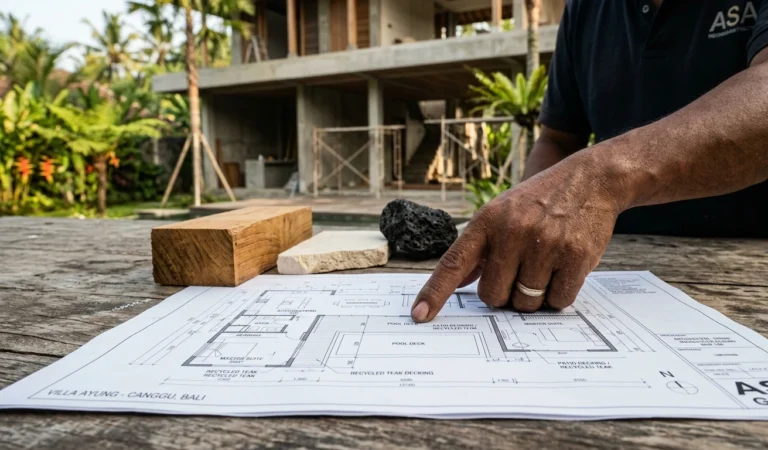
The pattern we observe at ASA Group, after completing construction across more than 50 villa projects in Bali, is consistent: villas built to minimize upfront construction cost rather than to maximize long-term performance predictably fail within 24–48 months.
The commercial consequence is direct: a villa with structural water damage, a stained or visibly deteriorated pool, or recurring maintenance emergencies receives lower Airbnb ratings, attracts fewer repeat bookings, and ultimately delivers yields well below projection. In our experience, the difference between a properly built and an inadequately built villa of similar specification is not visible in photographs at handover, it becomes visible at months 24–36.
View our completed projects at ASA Group Portfolio to see building standards and finish quality across active rental villas we have constructed across Bali.
For a detailed guide on warning signs to identify before signing a construction contract, see Bali Villa Contractor Red Flags.
If you have questions about construction contracts specifically, including the difference between lump sum and cost-plus arrangements and what each means for your cost certainty, our guide Lump Sum vs. Cost Plus: Bali Construction Guide covers both structures in detail.
The Full Comparison Table: Bali vs Phuket vs Dubai 2026
| Factor | Bali (Indonesia) | Phuket (Thailand) | Dubai (UAE) |
| Gross Rental Yield | 10–15% (cost) / 8–12% (market) | 7–12% | 6–9% |
| Typical Net Yield | 6–10% | 5–8% | 4–7% |
| Foreign Ownership | Leasehold (Hak Sewa / Hak Pakai) | Freehold (condo) / Leasehold (villa) | Freehold (designated zones) |
| Ownership Certainty | Moderate (lease-dependent) | High (condo freehold) / Moderate (villa leasehold) | High |
| Entry Price (2BR luxury) | $300K–$600K | $400K–$800K | $450K–$900K+ |
| Transaction Costs | ~4–8% | ~3–6% | ~5–7% |
| Local Income Tax on Rental | ~10% (treaty-dependent) | 15% withholding | 0% |
| Local Capital Gains Tax | 25% (on gain) | 0% | 0% |
| Primary Product Type | Private luxury villas | Resort condos / villas | High-rise apartments |
| Residency Visa | Golden Visa / Second Home Visa | LTR Visa | Golden Visa (AED 2M+) |
| 2025–2026 Incentive | PPN-DTP (PMK 90/2025) | None current | None current |
| Construction Risk | High (requires diligence) | Medium | Low (institutional) |
| Resale Liquidity | Moderate | Moderate-High | High |
| Tourism Arrivals (2024) | ~6M international | ~10M international | ~16M international |
| Lifestyle Product | Tropical villa, natural environment | Tropical resort, beach | Metropolitan luxury |
Frequently Asked Questions
Can foreigners legally own property in Bali in 2026?
Yes, through legally recognized structures, but not through direct freehold land ownership. The two most common routes for individual foreign investors are Hak Sewa (leasehold, typically 25–30 years with renewal clauses registered via notarial deed) and Hak Pakai (Right to Use, available to foreigners with valid Indonesian residency documents). For a full explanation of these structures, see: How Foreigners Can Legally Own Property in Bali.
Is Bali’s rental yield figure of 10–15% realistic in 2026?
The 10–15% gross yield figure is achievable in Bali in 2026, but it requires specific conditions. Net yield after management fees (20–30%), maintenance, taxes, and vacancy realistically lands at 6–10% for a well-run property. Properties that underperform on construction quality or are in oversupplied micro-markets will not achieve these figures.
What does Indonesia’s PPN-DTP incentive (PMK 90/2025) mean for property buyers in 2026?
PMK 90/2025 is an Indonesian government regulation providing VAT exemptions or reductions on primary-market residential property purchases below IDR 5 billion (approximately $315,000 USD at current exchange rates).
How does Phuket’s “guaranteed rental” model work, and is it safe?
In Phuket, several major developers offer guaranteed rental programs whereby a hotel management company commits to paying the property owner a fixed annual return, typically 6–7%, for a defined period (5–10 years) regardless of actual occupancy. The safety of this arrangement depends entirely on the financial strength and reputation of the guarantor company.
What are the total transaction costs when buying a villa in Bali?
Total acquisition costs when buying an existing villa in Bali typically include: BPHTB (land and building acquisition tax, 5% of taxable acquisition value), notarial fees (1–2%), legal due diligence (varies, typically $1,000–$3,000 USD depending on complexity), and potentially an agency commission (typically paid by the seller, but verify).
How does construction quality in Bali compare to Dubai or Phuket, and what should investors check?
Dubai’s institutional developer market, with mandatory government inspection regimes and significant developer liability, produces the most consistent baseline construction quality of the three markets. Phuket’s established large-developer market offers better baseline standards than Bali’s highly fragmented construction sector, though boutique villa construction in Phuket carries similar risks to Bali. Bali has no equivalent government inspection framework for private villa construction, placing the entire quality burden on the contractor and investor’s due diligence. Our guide on Bali villa contractor red flags covers the specific warning signs in detail.
Is Bali’s market approaching saturation, or is there still genuine investment opportunity in 2026?
The accurate answer is market-specific. Canggu’s core corridor has reached significant maturity, supply has grown substantially, and undifferentiated villa products in that area faces meaningful competition. However, adjacent emerging corridors (Pererenan, Seseh, Kedungu) and established premium markets (Uluwatu cliff-top, Ubud wellness) continue to show demand-supply dynamics that support strong yields for quality product. See our analysis of the current opportunity in Bali Villa Opportunity: Why Now Is the Optimal Time for Construction.
What is the resale process and liquidity like for a Bali villa compared to Phuket or Dubai?
Bali’s secondary market for villa leasehold property is less liquid than either Phuket or Dubai. Factors that reduce liquidity include: the complexity of leasehold transfer (requires notarial re-registration, BPHTB payment by the buyer, and verification of remaining lease term), the highly fragmented nature of the market (no centralized MLS or major institutional market-makers), and the fact that the buyer pool, while international, is smaller than Dubai’s. Well-maintained, professionally managed villas in prime locations with substantial lease terms remaining typically sell within 3–6 months at appropriate pricing. Villas with maintenance deferred, poor review history, or short remaining lease terms can take 12 months or longer. Dubai’s institutional secondary market and MLS infrastructure make it significantly more liquid. Phuket falls between the two. The implication for investors: factor in a realistic exit timeline when modeling your Bali investment, and maintain the property to maximize both yield and eventual resale value.
Conclusion: The “Bali Quality Era” Demands a Different Approach
The framing of a single “winner” in a Bali vs. Phuket vs. Dubai comparison creates a false choice. These are different investment products with different risk-return profiles that suit different investor objectives and different portfolio compositions.
What is genuinely true about Bali in 2026 is this: the window for indiscriminate speculation, buying any land in any location and expecting capital appreciation to cover execution risk, has closed. What remains, and what remains compelling, is the opportunity for investors who bring the right combination of location judgment, legal due diligence, and construction quality to a market that still offers gross rental yields unavailable anywhere else in the tropical resort property universe.
For foreign investors at the planning stage of a Bali villa project, the most important decision after location and legal structure is the quality of your construction partner. The gap between a well-built and a poorly built villa in Bali is not recoverable, it is built into the structure, visible to every guest who stays, and reflected in every review score the property earns.
ASA Group Indonesia works with foreign investors across Bali’s primary rental corridors to deliver villa construction that is engineered for the tropical environment, designed for the rental market, and built to perform over a 25–30 year lease horizon. Whether you are comparing your first Bali investment against Phuket or Dubai alternatives, or moving forward with a project you have already decided on, we welcome the conversation.
Explore our completed work at withasa.com/portfolio, and contact our team through our Bali villa contractor page to discuss your project. If you are based outside Indonesia and need a general contractor near me search that returns a team with international communication standards and English-language project management, or a dedicated contractor in Bali with a verifiable completed-project portfolio, that is precisely what ASA Group is built to provide.