

By ASA Group Indonesia | Updated: May 2026 | Est. reading time: 10 minutes
Quick Answer: Is Seseh the Next Big Investment Zone in Bali?
Yes, and the window is still open, but it is narrowing. Seseh is Bali’s highest-conviction emerging investment corridor in 2026. Land prices remain 40–60% below comparable Canggu plots, while rental demand and capital appreciation projections are tracking similar to what Pererenan offered investors in 2021–2022. The combination of protected green-belt zoning, proximity to Canggu’s lifestyle ecosystem, and limited buildable supply creates a scarcity dynamic that very few areas in Bali can replicate today.
1. Why Canggu’s Overflow Is Seseh’s Opportunity
Bali’s property market follows a predictable pattern of westward value migration. Seminyak peaked, then Canggu emerged. Canggu peaked, then Pererenan absorbed the premium overflow. In 2026, that same dynamic is playing out one corridor further west, and Seseh is the direct beneficiary.
By mid-2026, central Canggu, particularly Batu Bolong and Echo Beach, has reached structural saturation. Land in prime Berawa now exceeds IDR 2.5 billion per are. Traffic congestion along Jalan Pantai Berawa and Jalan Batu Bolong is a documented guest experience issue that affects short-term rental reviews and, consequently, occupancy rates. High-net-worth investors and the long-stay resident demographic that has transformed the area’s economics are actively seeking what Canggu offered in 2019: the lifestyle without the density.
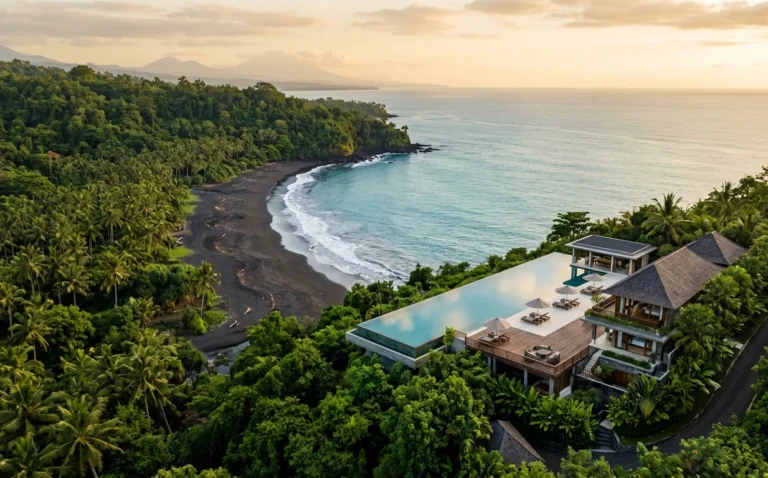
Seseh, located just 10–15 minutes north of Berawa and directly adjacent to Pererenan, delivers exactly that. The black-sand coastline, rice field corridors, and temple-dotted landscape remain intact in a way that Canggu’s interior no longer can offer. This is not speculative positioning, it is the same structural shift that created Pererenan’s current value, now one step further along the same trajectory.
For context on where Canggu now stands in the investment cycle, see our full analysis: Is Canggu Villa Investment Still Worth It in 2026?
2. What Makes Seseh Different From Other “Next Big Things”
Bali has no shortage of areas marketed as “the next Canggu.” Most do not deliver. Seseh is different for three structural reasons that have nothing to do with marketing narrative.
First: Proximity is real. Unlike Tabanan or North Bali, which require genuine lifestyle trade-offs, Seseh is within a 10–15 minute drive of Finns Beach Club, La Brisa, Canggu’s co-working spaces, and international schools. Guests and long-stay residents do not lose access to the Canggu lifestyle ecosystem, they simply escape its congestion when they return home. This is a meaningful distinction that is reflected in rental demand data.
Second: The infrastructure is arriving, not promised. Road improvements connecting Seseh to the Canggu–Pererenan corridor have progressed materially in 2024–2025. Unlike areas that have been “about to take off” for years, Seseh’s development is backed by on-the-ground construction activity, not speculation.
Third: Institutional capital has already validated the thesis. The presence of internationally branded resort developments in and around Seseh is a meaningful signal. Institutional hotel brands conduct rigorous due diligence before committing capital. Their arrival confirms that Seseh’s demand fundamentals, beach access, zoning protections, proximity to Canggu, meet the threshold for long-term investment grade positioning.
3. Land Prices and ROI: What to Expect in Seseh in 2026
Current Land Prices (May 2026 estimates)
| Location | Land Price/Are (IDR) | Notes |
| Seseh, beachfront | IDR 1.2–2 billion | Limited availability; premium for ocean views |
| Seseh, inland (rice field / garden view) | IDR 800 million–1.3 billion | Best value-to-upside ratio currently |
| Pererenan (comparable) | IDR 1.5–2.2 billion | Seseh still ~40% lower |
| Berawa/Canggu core | IDR 2.2–3.5 billion | Mature pricing, lower appreciation ceiling |
Rental Yield Projections
Based on ASA Group’s build data and active projects in the Greater Canggu corridor, premium villa performance in Seseh in 2026 tracks as follows:
| Property Type | Gross Annual Yield | Capital Appreciation (Build Phase) |
| 2-Bed design-led villa | 10–13% | 18–22% |
| 3–4 Bed luxury villa | 12–15% | 20–25% |
| Off-plan / pre-construction | N/A during build | 20–25% (projected) |
Source: ASA Group project and market data, 2025–2026.
These projections align with the Pererenan trajectory of 2021–2023, when early investors in that corridor saw similar appreciation curves before pricing normalized at today’s levels. The key variable, as it always is in Bali, is build quality and design differentiation.
For full build cost breakdowns applicable to Seseh projects, see: How to Build a Villa in Bali: A Complete Guide for Foreign Investors
4. Zoning and the Green Belt Advantage
Seseh’s zoning profile is one of its most underappreciated investment advantages.
Significant portions of the area surrounding Seseh village are designated as protected green belt (Ruang Terbuka Hijau) and agricultural conservation zones under Bali’s spatial planning regulations (RTRW Kabupaten Badung). This is not a temporary classification, it reflects Bali’s long-standing policy commitment to preserving its agricultural and spiritual landscape, particularly in areas adjacent to active subak (traditional irrigation) systems.
The investment implication is straightforward: the supply of buildable land in Seseh is structurally constrained. Unlike areas where rezoning pressure constantly introduces new supply, green belt designations create a permanent ceiling on development density. Every villa built in a compliant zone here benefits from a scarcity premium that will only increase as demand grows.
This stands in direct contrast to areas like Seminyak or Canggu’s interior, where relentless infill development has eroded the aesthetic and spatial qualities that originally drove demand.
For investors, the critical practical step is rigorous zoning verification before any land acquisition. The permit landscape in 2026 is more tightly enforced than at any previous point.
Full guidance on zoning compliance and permit requirements: Navigating Zoning Laws for Your Bali Villa Project
5. The Rise of Managed Resort Communities in Seseh
The single most significant market signal in Seseh in 2025–2026 has been the entry of managed resort development projects, including internationally branded hospitality operators who have committed capital to the corridor.
This matters for individual investors for a specific reason: institutional projects raise the guest profile and price ceiling of an entire area. When a 5-star resort establishes Seseh as a destination in its own right, appearing in international travel media, OTA category filters, and luxury travel agent portfolios, it creates a rising tide effect for surrounding villa investments.
Individual investors who build adjacent to or within the influence radius of these anchor developments benefit from increased organic discovery, a guest demographic that expects and will pay for premium experiences, and a legitimized area narrative that makes short-term rental marketing considerably easier.
This is the same dynamic that saw Uluwatu’s villa market transform after the establishment of its first cliff-top resort properties, and that drove Pererenan’s premium positioning once its first high-profile beach club and wellness venue anchored the area’s identity.
6. Build Quality as the Non-Negotiable Factor in 2026
The 2026 Seseh market is yield-driven, not speculative. The era when any villa in any emerging area generated strong returns is over. What separates villas that achieve 12–15% gross yields from those that struggle at 6–8% is almost entirely a function of three variables: location within the sub-area, design quality, and operational management.
What “investment-grade” means in practice in Seseh:
- Architectural identity that is photographable, Instagram-native, and distinct from generic tropical minimalism
- A specific guest niche, wellness (sauna, cold plunge, yoga shala), remote work (dedicated office, fiber internet, ergonomic workspace), family (safe pool fence, kids’ amenities), or luxury (butler service, private cinema)
- Smart home integration: automated lighting, climate control, security systems
- Sustainable construction: natural ventilation design, solar-ready electrical infrastructure, low-VOC materials, increasingly demanded by the European and Australian long-stay demographic
- Complete permit documentation: PBG, SLF, and valid accommodation business license (NIB)
At ASA Group, these are not optional upgrades, they are the baseline specification for any build we deliver. Our active Bali portfolio, including the OceaniQ Villas, Lumara Villa, and Nymn Natural Villa, demonstrates what this standard looks like in practice.
7. Seseh vs. Canggu vs. Pererenan: A Side-by-Side Comparison
| Factor | Canggu Core | Pererenan | Seseh |
| Land Price/Are | IDR 2.2–3.5B | IDR 1.5–2.2B | IDR 800M–1.5B |
| Market Stage | Mature / Peak | Growth / Consolidating | Early Growth |
| Supply Constraint | Low (infill continues) | Medium | High (green belt) |
| Guest Profile | Mixed / High volume | Premium, longer stay | Premium, privacy-seeking |
| Capital Appreciation Ceiling | Low–Medium | Medium | High |
| Congestion Impact on Guests | High | Medium | Low |
| Distance to Canggu Amenities | 0 min | 5–10 min | 10–15 min |
| Gross Rental Yield (top tier) | 10–13% | 12–15% | 12–15% (projected) |
The data suggests Seseh currently occupies the position Pererenan held in 2021: priced below its long-term equilibrium, with structural supply constraints and growing demand. The window for entry at current land prices is, by this reading, approximately 18–36 months before pricing normalizes to Pererenan levels.
8. Risks Investors Should Know
Infrastructure Lag. While road improvements are underway, Seseh’s infrastructure, utilities, telecommunications, road quality on secondary routes, is still developing. Budget for potential connectivity costs if your plot sits beyond existing utility reach.
Due Diligence on Zoning Classification. Not all land marketed as “Seseh” is in the same zoning category. Some plots adjacent to conservation zones carry building restrictions that are not immediately obvious. Independent zoning verification by a licensed notaris (PPAT) is non-negotiable before signing any land agreement.
Management Ecosystem Still Maturing. Canggu’s villa management infrastructure, property managers, cleaning services, maintenance contractors, is highly developed. Seseh’s ecosystem is growing but not yet at the same level of density. Build this into your operational model and budget accordingly.
Liquidity Timeline. Seseh is an emerging market. While capital appreciation upside is high, resale liquidity is lower than Canggu or Berawa. Investors should model a 5–7 year minimum horizon to realize full appreciation value.
For a comprehensive overview of the pitfalls to avoid across all Bali investment areas: Bali Property Investment Pitfalls: A Guide to Safe and Smart Decisions
9. FAQ: Investing in Seseh in 2026
Where exactly is Seseh in relation to Canggu?
Seseh is a coastal village in Mengwi subdistrict, Badung Regency, located approximately 5–7 km north of Berawa and 10–12 km north of Batu Bolong. By road, it is a 10–15 minute drive from the heart of Canggu, depending on traffic conditions.
What is the current land price in Seseh?
As of May 2026, land in Seseh ranges from approximately IDR 800 million per are for inland garden-view plots to IDR 1.2–2 billion per are for beachfront or ocean-view positions. Prices have increased 15–20% in the past 12 months.
Can foreigners buy land in Seseh?
Foreigners cannot hold freehold (Hak Milik) title in Indonesia. The standard structures for foreign investment in Seseh are Leasehold (Hak Sewa), typically 25+25 years, or Hak Pakai for holders of a valid Indonesian residence permit (KITAS/KITAP). A PT PMA structure is also used for larger investments. All three can be executed safely with qualified Indonesian legal counsel. For visa structures that support property investment, Bali Visa’s Golden Visa guide is a reliable reference.
What rental yield can I expect from a villa in Seseh?
Top-performing villas, design-led, professionally managed, with strong OTA presence, are achieving 12–15% gross annual yield. Net yield after management fees and operational costs typically sits 3–5 percentage points lower. Generic or poorly managed builds are performing at 6–8% gross, which after costs produces a weak net return.
Is Seseh safe from overdevelopment?
Green belt zoning protecting significant portions of Seseh creates a structural supply constraint that most Bali locations do not have. This does not eliminate all development risk, but it substantially reduces the risk of the corridor becoming a concrete-dense overbuilt zone in the manner that parts of Canggu’s interior have. Verification of your specific plot’s zoning classification remains essential.
How long does it take to build a villa in Seseh?
The timeline is the same as across Bali: 12–18 months construction, plus 3–6 months for design development and PBG permit approval. Total timeline from land acquisition to first rental income should be modeled at 18–24 months.
What types of villas perform best in Seseh?
Based on current guest demand patterns, the highest-performing villa typologies in Seseh and adjacent Pererenan are: wellness-focused villas (outdoor yoga shala, cold plunge, sauna, organic garden), remote-work-oriented villas with high-spec connectivity and workspace, and design-forward 3–4 bedroom villas targeting the long-stay European and Australian demographic who prioritize privacy over proximity to nightlife.
10. Secure Your Position in Seseh with ASA Group Indonesia
Seseh in 2026 represents the clearest early-mover opportunity remaining in the Greater Canggu corridor. The structural case, supply constraint, proximity to demand, institutional validation, and a land price gap relative to comparable locations, is compelling. But early-mover advantage only holds for those who move with precision: the right plot, the right structure, the right build.
ASA Group Indonesia has delivered villa and resort projects across Bali’s highest-growth corridors, from Nusa Dua and Jimbaran to Ubud and the Sumberkima coast. We bring the same standard of architectural quality, engineering rigour, and full-permit documentation to every project we undertake.
If you are evaluating a Seseh build in 2026, we can walk you through land assessment, design direction, a realistic cost model, and the full permit process, with zero guesswork.