


By ASA Group Indonesia | Updated: May 2026 | Est. reading time: 12 minutes
Disclaimer: ASA Group is a Bali-based villa contractor. This analysis is grounded in our direct project experience across Canggu, Pererenan, Berawa, and Nusa Dua, combined with publicly available market data. We have a commercial interest in villa construction, and we’ve tried to present both the opportunities and the risks as objectively as possible.
Quick Answer: Is Canggu Still Worth It?
Yes, but only if you invest in the right sub-zone, with the right build quality, and the right management. The era of easy returns from any villa anywhere in Canggu is over. In 2026, top-performing properties in high-growth corridors like Pererenan and Berawa are generating annual rental yields between 12% and 18%, while underperforming generic villas in saturated pockets may yield as little as 6–8%. The difference lies almost entirely in build quality, location, and professional management.
1. The 2026 Canggu Market: What Has Actually Changed
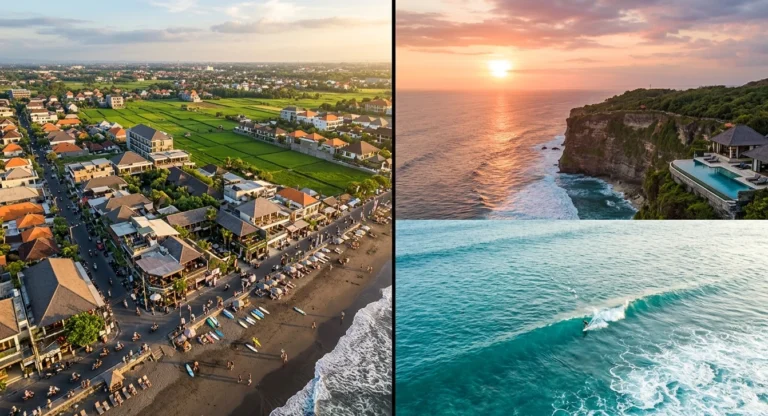
Canggu’s transformation from a quiet surf village to Bali’s most in-demand lifestyle hub has followed a predictable pattern: demand surged, supply followed, and now the market is maturing into something more sophisticated and more segmented.
What’s changed since 2022–2023 is not the demand for Canggu, Bali received over 6.3 million international visitors in 2024 according to BPS (Indonesia’s Central Statistics Agency), and the trend is continuing upward in 2025–2026. What’s changed is who is visiting and for how long. The short-stay tourist is increasingly being replaced by the long-stay resident: remote workers, digital nomads on Second Home KITASs, retirees on Silver Hair visas, and high-net-worth individuals using Indonesia’s Golden Visa program.
Three Demand Drivers That Are Not Going Away
The Digital Nomad–to–Resident Pipeline. Indonesia’s Second Home KITAS and Golden Visa have created a new class of long-term resident who rents premium villas for 3–12 months at a time. Monthly rental rates for well-positioned 3–4 bedroom villas in Berawa and Pererenan range from USD 3,500–8,000/month, generating more stable income than relying purely on short-term Airbnb.
The Lifestyle Gravity Well. Canggu’s density of world-class beach clubs (Finns, La Brisa, Marble), co-working spaces, international schools, and healthy food culture is now a moat that no other Bali area can replicate in the short term. This ecosystem keeps both occupancy and rates high year-round.
Infrastructure Maturation. Improved road shortcuts reducing congestion between Canggu and Seminyak, plus the ongoing expansion of quality villa management services, have stabilized the operational landscape. The unpredictability of early-stage markets has been replaced with a professionalized hospitality ecosystem, good news for investors who are new to Bali.
2. ROI Breakdown: Realistic Numbers for 2026
Let’s be direct about what realistic returns look like. The figures below are based on ASA Group’s own project data from our active Bali villa portfolio and corroborate closely with 2026 Airbnb market data published by Airroi, which tracks over 4,100 active listings in the Canggu area.
According to industry data, the average Airbnb listing in the Canggu area achieves approximately $214 Average Daily Rate (ADR) with around 41% average annual occupancy, translating to roughly $25,000–$32,000 median gross annual revenue per listing. However, the performance gap between tiers is enormous: the top 10% of listings achieve 80%+ occupancy, while the bottom tier may sit at 20% or below.
ASA Group ROI Estimates by Property Type (Canggu/Pererenan, 2026)
| Property Type | Avg. Annual Gross Yield | Capital Appreciation (Est.) | Notes |
| 2-Bed Boutique Villa (design-led) | 10–12% | 8–10% | Airbnb + monthly rental mix |
| 4-Bed Luxury Estate | 12–15% | 12–15% | Higher ADR, longer stays |
| Off-plan / Pre-construction | N/A during build | 20–25% (pre-completion gain) | Exit at completion or operate |
| Generic 2-Bed (white-box spec) | 6–8% | 3–5% | Heavily competed segment |
Source: ASA Group project data 2024–2026; Airroi Canggu market report 2026.
Key insight from our builds: Villas with a strong architectural identity, whether that’s tropical brutalism, organic Balinese modernism, or wellness-focused design, consistently fetch a 25–30% premium in nightly rates on Airbnb and Booking.com compared to standard “minimalist” builds. In 2026, design is a direct financial asset, not just an aesthetic preference.
3. The “New Canggu”: Pererenan and Seseh
The most significant geographic shift of 2025–2026 has been the migration of premium development westward. Batu Bolong and Echo Beach represent Canggu at its most saturated, high demand, but also high competition, high land prices, and peak congestion.
Pererenan: The New Luxury Standard
Pererenan has emerged as Canggu’s premium residential corridor. Quieter than Batu Bolong, yet within a 5–10 minute drive of the best beach clubs and restaurants, it attracts a demographic that actively seeks privacy, longer stays, and higher design standards. Land prices here are still meaningful but more accessible than Berawa’s IDR 2.5 billion+ per are.
Our ongoing Nymn Natural Villa project exemplifies the Pererenan opportunity: a design-forward build targeting the premium monthly rental and short-stay market simultaneously.
Seseh: The Last Frontier for Land Banking
For investors with a 3–7 year horizon, Seseh offers the last available ocean-view plots in the Greater Canggu corridor at still-accessible price points (IDR 800 million–1.2 billion/are). As infrastructure moves north and west, and as Pererenan becomes fully absorbed into the “Canggu premium” narrative, Seseh is positioned as the next value unlock.
4. Canggu vs Other Bali Areas: A Side-by-Side Comparison
One of the most common questions we receive from investors is: “Should I invest in Canggu or somewhere else in Bali?” Here’s a grounded comparison for 2026.
| Area | Avg. Yield | Land Price/Are | Liquidity | Best For |
| Canggu Core (Batu Bolong) | 8–12% | IDR 2–3.5B | High | Short-stay, high turnover |
| Berawa | 10–14% | IDR 2–2.8B | High | Luxury short + monthly rental |
| Pererenan | 11–15% | IDR 1.2–2B | Medium-High | Long-stay, premium demographic |
| Seseh | 9–13% (projected) | IDR 800M–1.2B | Medium | Land banking, early-mover |
| Seminyak | 8–10% | IDR 3–5B | High | Mature market, lower growth |
| Uluwatu/Pecatu | 10–14% | IDR 1–2.5B | Medium | Surf/lifestyle, strong growth |
| Ubud | 9–12% | IDR 600M–1.5B | Medium | Wellness tourism, longer stays |
Source: ASA Group market research and active project data, 2026.
For a deeper analysis of Bali’s property development landscape and zoning considerations that affect each area, see our guide: Navigating Zoning Laws for Your Bali Villa Project.
5. What Does It Cost to Build or Buy a Villa in Canggu?
This is the question most investment articles avoid, but it’s the one that matters most for your financial model.
Land Costs (2026 estimates)
- Prime Berawa / Batu Bolong: IDR 2–3.5 billion/are
- Pererenan (inland): IDR 1.2–2 billion/are
- Seseh: IDR 800 million–1.2 billion/are
Construction Costs
Build costs in Bali vary significantly based on specification level, design complexity, and contractor quality:
| Spec Level | Build Cost/m² (IDR) | USD Equivalent |
| Mid-range (functional) | 5–8 million | ~$300–$490/m² |
| High-end (investment grade) | 8–12 million | ~$490–$740/m² |
| Luxury / architect-designed | 12–20 million | ~$740–$1,230/m² |
A typical 2-bedroom investment villa of 200m² built area, at high-end spec, would therefore cost IDR 1.6–2.4 billion in construction alone, before land and furniture/fit-out.
For a comprehensive breakdown of the entire process, read: How to Build a Villa in Bali: A Complete Guide for Foreign Investors.
To avoid the most common financial and legal mistakes, also review: Bali Property Investment Pitfalls: A Guide to Safe and Smart Decisions.
6. Risks and How to Mitigate Them
No investment analysis is complete without a clear-eyed look at the downside.
Risk 1: Oversupply in the Generic Mid-Market
With over 4,100 Airbnb listings in the Canggu area alone, the generic mid-market is structurally oversupplied. If your villa looks and prices like 3,000 other villas, you will compete on price, and that is a race you won’t win.
Mitigation: Invest in distinctive architecture, a specific guest niche (wellness, remote work, family), and premium amenities. The data is clear: differentiated villas operate at 70–80%+ occupancy while generic ones struggle at 30–40%.
Risk 2: Legal and Zoning Non-Compliance
In 2026, Bali’s regional government has significantly increased enforcement of building permits (PBG), occupancy certificates (SLF), and zoning classifications. Villas operating without complete documentation face fines, operational shutdowns, and, in extreme cases, demolition orders.
Mitigation: Work exclusively with contractors who handle the full permit process. At ASA Group, every build includes complete PBG/SLF documentation as a deliverable. See our guide on Bali property zoning laws for the full regulatory landscape.
Risk 3: Management Saturation and Poor OTA Performance
Having a well-built villa is necessary but not sufficient. Without active OTA (Airbnb, Booking.com, Agoda) management, dynamic pricing, and professional guest experience, your occupancy will fall to the market average, or below.
Mitigation: Budget for professional villa management from day one. Expect management fees of 15–25% of gross rental revenue, this is a cost that directly protects your net yield.
Risk 4: Currency and Repatriation Risk
All Bali rental income is denominated in IDR. Investors receiving USD or EUR face currency risk on repatriation. IDR has historically depreciated against major currencies at roughly 3–5% annually, which should be factored into your net yield calculations.
7. Why Build New vs. Buy an Existing Villa?
In 2026, we consistently recommend building over buying for most investor profiles. Here’s why.
Modern Infrastructure Standards. Villas built before 2019–2020 typically lack smart-home integration, energy-efficient systems, and the design aesthetics that today’s premium rental guest expects. Retrofitting often costs 30–50% of a new build anyway.
Customization for Guest Niches. Building new allows you to design specifically for high-yield niches: wellness villas with ice baths and saunas, family villas with safe pool zones and kids’ rooms, or remote-work villas with dedicated office spaces and fiber internet infrastructure. Each of these commands a premium and attracts repeat guests.
Warranty and Structural Certainty. Purchasing an existing villa means inheriting its construction history, including any unpermitted modifications, aging plumbing, or substandard electrical systems. Building with an established contractor gives you structural warranties and full documentation from day one.
The Off-Plan Advantage. If you move during the pre-construction phase, off-plan builds in high-growth corridors like Pererenan can generate capital appreciation of 20–25% between signing and completion, before the rental income even begins.
For a detailed walkthrough of the decision-making process, visit our Bali Villa Contractor services page.
We have delivered this model across multiple Bali projects, including OceaniQ Villas in Nusa Dua, Satori Resort, and our ongoing Lumara Villa project in Bali.
8. Legal Structures for Foreign Investors
Understanding Indonesian property law is non-negotiable before committing capital.
Leasehold (Hak Sewa / Hak Pakai atas Tanah Sewa) The most common structure for foreign villa investors. You lease the land for an agreed period, typically 25–30 years, with an option to extend for a further 20–25 years. A well-structured lease with an extension clause and a right of first refusal for renewal gives you effective control for 45–55 years. This is the structure used in most investment-grade villa projects in Canggu.
Hak Pakai (Right to Use) Available to foreign nationals who hold a valid Indonesian residence permit (KITAS/KITAP). This provides stronger tenure security than a standard lease but is subject to the permit remaining valid. For long-term residents, this is a viable alternative to leasehold.
PT PMA Structure Some investors establish a foreign-owned limited liability company (PT PMA) to hold property under Hak Guna Bangunan (Right to Build). This structure offers greater legal control but requires minimum investment thresholds and ongoing regulatory compliance.
What is not available to foreigners: Hak Milik (freehold ownership) cannot be held directly by a foreign national. Nominee arrangements using Indonesian citizens as nominal landowners are illegal and constitute a significant legal and financial risk.
For visa structures that support property ownership (Second Home KITAS, Golden Visa), the Indonesian Immigration guide by Bali Visa is a reliable reference.
Also read: Is Now the Right Time to Build a Villa in Bali?
9. FAQ: Investing in Canggu in 2026
What is the average rental yield for a villa in Canggu in 2026?
Top-performing villas (design-led, professionally managed, well-located) in Canggu and Pererenan are achieving gross annual yields of 12–15%. The market average, accounting for all listings, is closer to 8–10% gross. Net yields after management fees and operational costs typically sit 3–5 percentage points below the gross figure.
Can foreigners own a villa in Canggu?
Foreigners cannot hold freehold (Hak Milik) title in Indonesia. The most common and secure structures for foreign villa investment are Leasehold (Hak Sewa), typically 25+25 years, and Hak Pakai, available to holders of a valid Indonesian residence permit. Both structures can be executed safely with the right legal counsel.
What is the minimum budget to invest in a Canggu villa in 2026?
A realistic entry point for a completed, investment-grade 2-bedroom villa in Pererenan or outer Canggu (land + build + furniture) starts at approximately USD 250,000–350,000 (IDR 4–5.5 billion). Prime Berawa or Batu Bolong locations will add 30–60% to the land component.
Is Canggu property market in a bubble?
Unlike speculative bubbles driven purely by financial engineering, Canggu’s value is underpinned by real occupancy, real visitor numbers, and a structural shift in how global professionals choose to live and work. The risk is not a crash, it is stagnation for undifferentiated properties in oversupplied sub-markets. Quality assets in high-growth corridors continue to appreciate.
How long does it take to build a villa in Bali?
A standard 2–3 bedroom villa, from permit approval to handover, typically takes 12–18 months with a reputable contractor. Design and permitting (PBG application) can add 3–6 months before construction begins. Total timeline from land acquisition to first rental income: 18–24 months is a realistic expectation.
What permits are required to rent out a villa in Bali?
At minimum, you need a PBG (Building Approval Permit), SLF (Functional Compliance Certificate), and a valid business license for accommodation services (NIB/KBLI for villa rental). Operating without complete documentation is an increasing enforcement risk in 2026.
Is Pererenan better than Canggu for investment in 2026?
For investors prioritizing capital appreciation and access to a higher-spending, longer-staying guest demographic, Pererenan offers a stronger risk-adjusted return than the saturated core of Canggu in 2026. Land is cheaper, competition is less intense, and the guest profile is more consistent with premium yields.
What are the best amenities to include in a Canggu investment villa?
Based on our build data and market feedback: private pool (non-negotiable), high-speed fiber internet and dedicated workspace, outdoor shower and lush landscaping, smart home controls, and at least one differentiated feature, whether a rooftop terrace, outdoor cinema, private gym, plunge pool, or wellness room (sauna/cold plunge). These features directly impact your ADR and occupancy rate.
10. Is Canggu Villa Investment Right for You? Next Steps with ASA Group
Canggu villa investment in 2026 remains one of the most compelling real estate opportunities in Southeast Asia, but it rewards preparation, precision, and partnership with people who operate inside this market daily.
ASA Group Indonesia has delivered villa and resort projects across Bali, from Nusa Dua to Nusa Penida to Jimbaran, and we understand what separates a performing asset from one that underdelivers. Our expertise spans land assessment, architectural design, full-permit management (PBG/SLF), and construction to international standards.
If you’re evaluating a Canggu or Pererenan build in 2026, we’d be glad to walk you through our project process, share real build cost data, and help you stress-test your investment model.Talk to the ASA Group Team → Explore Our Bali Villa Portfolio →