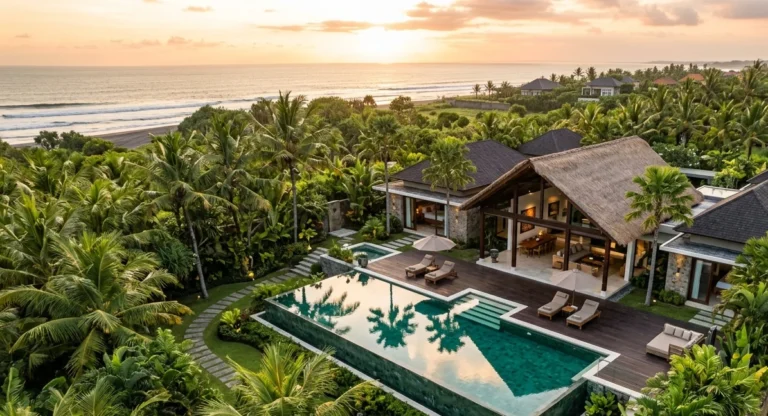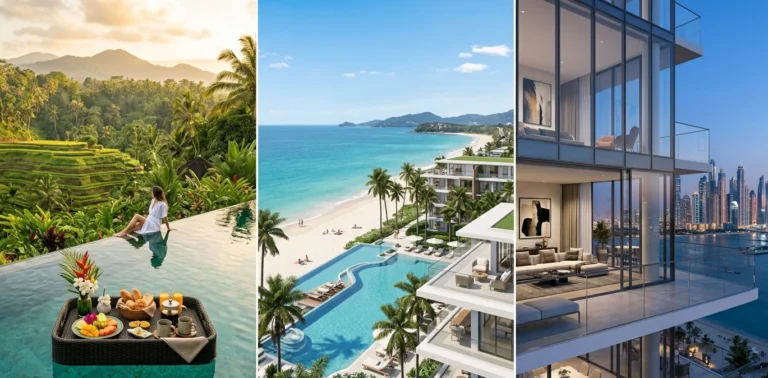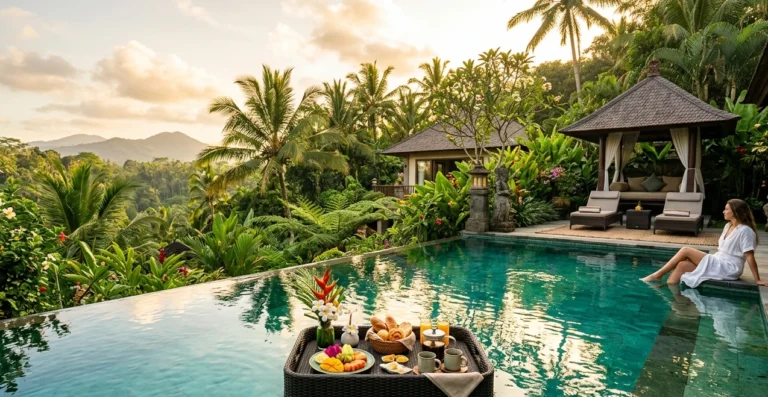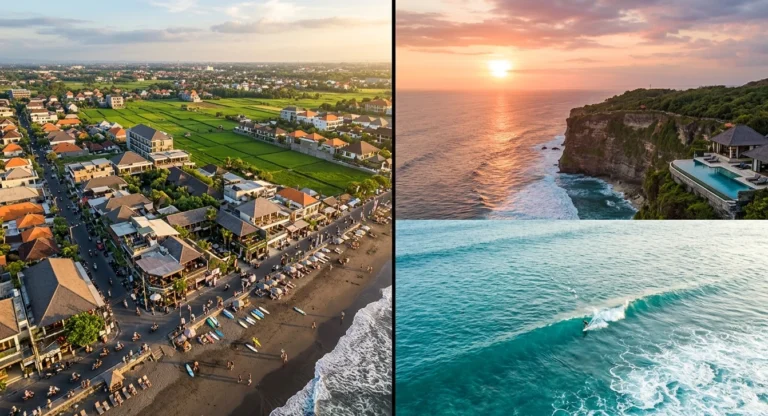



Bali’s property market continues to deliver some of the strongest rental yields in Southeast Asia, with well-positioned villas generating between 8–15% annually, and in premium locations like Uluwatu and Pererenan, even higher. But as competition intensifies across established hubs like Canggu, Seminyak, and the Bukit Peninsula, the gap between a “good return” and an “exceptional return” is no longer determined by location alone.
It is determined by design.
At ASA Group Indonesia, our team has delivered over 200+ construction projects across Bali and East Java, from boutique rental villas in Canggu to large-scale resort developments like OceaniQ Villas Nusa Dua and Satori Resort Nusa Dua. What we have observed consistently: strategic architecture decisions are the single highest-leverage investment a villa owner can make before breaking ground.
This guide covers seven architecture principles that translate directly into higher Average Daily Rates (ADR), lower operational costs, and stronger long-term capital appreciation for your Bali property investment.
Quick Answer: The 7 architecture tips for higher Bali property ROI are: (1) Tropical Modernism with local materials, (2) ensuite-first layout planning, (3) biophilic passive cooling design, (4) an “Instagrammable” statement piece, (5) low life-cycle-cost materials, (6) indoor-outdoor open living, and (7) sustainability and smart-home integration
Why Architecture is a Financial Decision, Not Just an Aesthetic One
In property investment, architecture is typically treated as a cost center. The data suggests otherwise.
Before diving in: if you are still in the planning phase, our comprehensive guide to building a villa in Bali covers the full process, from land acquisition and zoning to permits and contractor selection. This article focuses specifically on the architectural decisions that drive financial performance.
Tip 1: Embrace Tropical Modernism, But Keep the Balinese Soul
What it is: Tropical Modernism strips away ornamental excess while retaining authentic local character through materiality and spatial rhythm.
The most commercially successful villas in Bali’s current rental market share a common aesthetic DNA: clean geometric lines, natural textures, and a sense of being “rooted” in Bali rather than imported from elsewhere. This movement, often called Tropical Modernism, is not a trend. It is a positioning strategy.
From an ROI perspective, achieving this style through locally sourced materials provides a double benefit:
- Aesthetic longevity: Natural stone, reclaimed timber, and exposed concrete do not date. A villa built on these principles in 2020 still photographs beautifully in 2026. Avoiding complete renovation cycles saves investors IDR 300–600M every 5–7 years.
- Material durability: Batu Paras limestone, Ulin wood (when properly treated), and hand-crafted plaster perform exceptionally well in Bali’s humid, salt-influenced climate, far better than many imported synthetic materials.
Key materials to specify:
- Batu Paras (local limestone) for feature walls and flooring
- Reclaimed Ulin or Bengkirai wood for structural and decorative timber
- Alang-alang or layered concrete for roofing (avoid Mediterranean clay tiles, which absorb humidity poorly in Bali’s wet season)
- Exposed smooth concrete for internal walls and ceilings
Tip 2: Design for the Ensuite Experience, Privacy Drives 5-Star Reviews
The ROI of layout: A villa’s room layout directly determines its Airbnb and Booking.com review score. Review score directly determines occupancy rate. This chain is measurable.
For Bali property investment, the most important layout principle is the Ensuite-First Rule: every bedroom must function as a self-contained sanctuary with a private semi-outdoor bathroom. This is not a luxury feature, it is a baseline expectation among the high-value traveler segment that drives premium ADR.
Layout Hierarchy for Maximum ROI
| Zone | Design Principle | ROI Impact |
| Bedroom | Ensuite semi-outdoor bathroom, minimum 25 sqm | High, direct effect on review score |
| Pool Deck | Central position, accessible from all bedrooms | High, “hero shot” for listings |
| Kitchen/Living | Open-plan, separated from bedroom wing | Medium, reduces acoustic complaints |
| Staff Area | Separate access, hidden from guest sightlines | Medium, enables professional villa management |
Acoustic privacy is consistently the most cited complaint in 3-star villa reviews. Positioning the communal kitchen and entertainment area on a separate axis from the bedroom wing, with a transition corridor or landscaping buffer, is the single cheapest fix that moves a 3.8-star property toward 4.5.
Tip 3: Biophilic Design as a Cost-Reduction Strategy, Not Just Aesthetics
Biophilic design is the architectural practice of connecting interior spaces to natural elements, light, air, vegetation, and water. In Bali’s context, this has a direct, quantifiable impact on your monthly operating expenses.
The Passive Cooling Calculation
Electricity is consistently among the top three operational costs for villa owners in Indonesia. A villa that relies entirely on mechanical air conditioning in its common areas can face monthly electricity bills 40–60% higher than a comparably sized villa designed for natural airflow.
Key passive cooling architecture features:
- Cross-ventilation corridors: Orient the villa’s primary axis perpendicular to the prevailing southwest trade winds. Openings on opposite walls at equal heights create natural airflow without mechanical assistance.
- High ceilings (minimum 3.8m in living areas): Hot air rises and exits through high louvered openings, drawing cooler air from ground-level inlets.
- Deep overhanging eaves (minimum 1.2m projection): Blocks direct sun from hitting glass or walls during peak heat (10:00–15:00), reducing thermal load by an estimated 25–35%.
- Courtyard or central garden: A planted courtyard cools surrounding air through transpiration, reducing ambient temperature in adjacent rooms by 2–4°C.
Natural lighting also reduces daytime electricity usage while producing the warm, diffused light quality that photographs best in listing photos, compounding the benefit.
Tip 4: The “Instagrammable” Factor, Design One Unforgettable Statement Piece
We operate in a visual economy. A villa that generates organic social media content has a lower customer acquisition cost because guests become marketing partners. This translates directly into lower vacancy rates and reduced OTA commission dependency.
What qualifies as a Statement Piece:
An architectural feature that is distinctive enough to anchor the property’s visual identity across listing photos and guest social media posts. It must be:
- Photographable from a natural standing position
- Immediately recognizable across thumbnail-sized preview images on Airbnb
- Difficult to replicate cheaply (preventing direct copycat competition)
High-performing Statement Piece examples in Bali’s current market:
- Sunken bale or sunken sofa integrated into or adjacent to the pool, creates a “floating” visual effect
- Curved concrete staircase with recessed LED lighting visible from the main pool deck
- Floor-to-ceiling frameless glass wall that frames a specific view (rice field, jungle canopy, or ocean horizon)
- Freestanding outdoor bathtub positioned with a deliberate backdrop (garden wall, feature plant)
- Infinity edge pool precisely positioned to frame a specific landmark or skyline on the horizon
The investment in one well-executed statement piece, typically IDR 80–250M depending on complexity, typically recovers itself within the first 12 months through improved listing click-through rates and higher ADR justification.
Tip 5: Prioritize Low Maintenance Luxury, Life Cycle Cost Over Day-One Cost
The most expensive mistake in Bali villa construction: Choosing materials that look exceptional on the day of handover but require replacement or major maintenance within 18–24 months.
Bali’s tropical climate is severe: average humidity above 80%, salt-laden coastal air in beach zones, UV index consistently above 10, and 2,500–3,500mm of annual rainfall concentrated in a 5-month monsoon season. Materials that perform in European or even Singapore climates frequently fail here.
Material Specification Guide for Bali Conditions
| Element | Avoid | Specify Instead |
| Flooring | Polished marble (slippery when wet, stains) | Honed limestone or matte porcelain |
| Window frames | Painted softwood timber | Powder-coated aluminum (Grade 6063) |
| Roofing | Flat concrete slab without waterproof membrane | Pitched roof with EPDM or torch-on membrane |
| Pool coping | Standard ceramic tile | Batu Palimanan stone or micro-cement |
| External joinery | MDF or finger-jointed timber | Solid Merbau or treated Bengkirai |
The ASA cost principle: Allocating 10–15% more budget toward durable material specifications during construction typically reduces cumulative maintenance spend by 35–50% over the first five years. This is the difference between a villa that generates consistent NOI and one that erodes its returns through unplanned repair cycles.
For a detailed understanding of construction costs and material tier selection in 2026, see our full cost breakdown guide for building a villa in Bali.
Tip 6: Master Indoor-Outdoor Flow, Expand Perceived Value Without Expanding Footprint
Land prices across prime Bali zones have risen sharply. In Canggu and Seminyak, prime plots now frequently exceed IDR 2B per are for freehold. In this environment, every square meter of built space must perform at maximum efficiency.
The Open Living concept is not a stylistic preference, it is a spatial efficiency strategy. By eliminating the boundary between interior and exterior living zones, a 150 sqm villa can deliver the perceived spatial experience of a 250 sqm enclosed villa.
Execution Principles
- Large pivot or sliding glass doors (minimum 3m width): Creates a visual and physical connection between the living area and pool deck. When fully open, the pool deck becomes the primary living space, effectively doubling usable area.
- Consistent flooring material inside and outside: Using the same stone or tile across interior and exterior surfaces visually extends the floor plane and eliminates the psychological boundary between spaces.
- Covered outdoor living pavilion (bale): A well-designed bale adjacent to the pool extends usable living area during rain while maintaining the open-air aesthetic that differentiates a Bali villa from a hotel room.
- Strategic planting: Tall bamboo or Heliconia used as natural screens provide privacy from neighboring properties without walls, maintaining the open feel while addressing guest comfort.
This approach is particularly important for smaller single-hectare plots, where maximizing perceived space is the primary lever for achieving luxury-tier ADR.
Tip 7: Future-Proof with Sustainability and Smart Home Technology
Why this matters now: Bali’s regulatory environment is moving decisively toward green building requirements. The 2026 PBG (Persetujuan Bangunan Gedung) process already includes energy efficiency standards for new commercial villa construction. Investors who build for sustainability compliance now avoid costly retrofits in 3–5 years.
More immediately: sustainable villa features now command a measurable yield premium. Our data across managed projects suggests sustainable-certified or sustainability-positioned villas achieve approximately 25% higher nightly rates compared to standard concrete builds targeting the same traveler demographic.
Sustainability Features with the Strongest ROI
- Solar PV panels (minimum 5kWp for a 3-bedroom villa): Reduces electricity costs by 60–80% and provides a strong marketing claim. Payback period in Bali: typically 4–6 years.
- Rainwater harvesting system: Reduces water costs and provides an authentic sustainability story for eco-conscious guests. Particularly effective in south Bali where PDAM pressure is inconsistent.
- Smart home integration (remote AC, lighting, pool systems): Enables villa managers to optimize energy consumption remotely and reduces operational staff requirements. Systems from brands like Fibaro or Legrand are now commonly specified in Bali’s luxury tier.
- Greywater recycling for garden irrigation: Low-cost addition during construction (IDR 15–30M) that saves significant ongoing water costs.
For zoning compliance related to sustainable construction requirements in Bali, our guide on navigating Bali property development and zoning laws provides a detailed breakdown.
Summary: Architecture Tips and Their ROI Impact
| Architecture Tip | Primary ROI Driver | Estimated Impact |
| Tropical Modernism materials | Reduced renovation cycle + ADR premium | 10–20% ADR increase |
| Ensuite-first layout | Review score → occupancy rate | +0.5–1.0 review score point |
| Biophilic passive cooling | NOI improvement via lower electricity | 30–50% reduction in AC costs |
| Statement piece | Listing CTR → lower vacancy | 15–25% improvement in booking rate |
| Low maintenance materials | Reduced 5-year maintenance spend | 35–50% maintenance savings |
| Indoor-outdoor flow | Perceived space → premium positioning | 10–15% ADR increase |
| Sustainability + smart home | Yield premium + regulatory compliance | 20–25% ADR premium |
Conclusion: Build the Asset, Not Just the Villa
A Bali villa built without a clear architectural ROI strategy is a beautiful property with uncertain financial performance. A villa built with these seven principles, in the right zone, with the right contractor, is a performing asset with predictable returns, lower operational friction, and strong long-term capital appreciation potential.
The best architecture investment you can make is choosing the right team before you break ground.
ASA Group Indonesia specializes in bridging international design standards with Bali-specific construction expertise. With 200+ completed projects, from residential villas to large-scale resort developments, we understand what the market rewards and what it penalizes.
Explore our Bali villa contractor services or browse our completed projects to see how design-led construction translates into real investment performance.
Ready to start? Contact the ASA Group team at withasa.com to discuss your project scope, target market, and return objectives.
Frequently Asked Questions
What is the average ROI for a well-designed villa in Bali compared to a standard villa? Well-positioned luxury villas in areas like Uluwatu, Canggu, and Pererenan currently achieve net yields of 8–12%, with peak-performing assets reaching 15% or higher.
What architectural style works best for Bali villa rental investment?
Tropical Modernism, a clean, minimalist architectural language using local natural materials, consistently outperforms other styles in Bali’s rental market. It appeals to the widest traveler demographic (luxury leisure, digital nomads, wellness seekers), photographs exceptionally well for OTA listings, and ages gracefully without requiring style-driven renovations.
Is an open-plan layout or enclosed layout better for rental ROI?
It depends on your target market. Younger travelers, digital nomads, and couples strongly prefer open-plan tropical living. Families with young children and long-stay corporate renters often prefer a hybrid design, open communal areas with enclosed, air-conditioned bedrooms. A hybrid approach optimizes for the broadest possible booking audience and typically delivers the strongest overall ADR.
How much should I budget for sustainability features in a Bali villa?
A complete sustainability package, solar PV, rainwater harvesting, smart home controls, and greywater recycling, typically adds IDR 150–350M to a 3-bedroom villa’s construction cost, depending on specifications. However, the combination of 20–25% ADR premium, reduced ongoing utility costs, and long-term regulatory compliance generally produces a positive ROI on this investment within 3–5 years.
Can architecture choices affect whether I need more villa management staff?
Yes, significantly. A well-designed villa with centralized mechanical systems, smart home integration, and a layout that minimizes hidden spaces reduces the complexity of daily operations.