



Quick Answer: To hire a reliable villa contractor in Bali, verify their PT legal status and NIB number via Indonesia’s OSS portal, require a dual-language contract with a detailed line-item BoQ, and never agree to more than a 30% upfront deposit. Avoid any builder who cannot produce a valid PBG building permit or who deflects requests for a third-party quality inspection.
1. Why Hiring a Bali Villa Contractor Carries High Risk for Foreigners
Building in Bali is a “high-trust” game in a low-transparency market. Since the 2024–2025 construction boom across Uluwatu and Pererenan, we have seen a 40% increase in inquiries from clients asking us to “rescue” projects abandoned by unlicensed builders, a pattern also documented in Global Property Guide’s Indonesia buying report.
The core issue is what we call the Transparency Gap. In Bali, building regulations under the Undang-Undang Cipta Kerja (Job Creation Law) are often bypassed by “freelance” coordinators who operate without a registered legal entity. In our experience handling over 450+ completed projects since 2017, the most common disaster isn’t a cash scam, it’s structural failure caused by the absence of professional MEP (Mechanical, Electrical, Plumbing) planning that fails to account for Bali’s high-saline coastal air and monsoon humidity.
Understanding the full scope of a Bali villa project, from land rights through to construction, is essential before you hire anyone. Our guide on how to build a villa in Bali for foreign investors covers the complete regulatory and financial landscape if you are starting from scratch.
2. The 10 Red Flag Checklist: A Practitioner’s Warning
Red Flag #1 – No Legitimate PT Status or NIB
Direct Answer: The NIB (Nomor Induk Berusaha) is the mandatory business identity in Indonesia, verified through the government’s OSS (Online Single Submission) portal. If a contractor tells you they operate as a “freelance coordinator,” you have zero legal protection. ASA Group operates as a fully registered PT under Indonesian law — we always provide our credentials upfront because, without a legal entity, your construction agreement is virtually unenforceable in local courts. This position is reinforced by Hukum Online’s analysis of Indonesian construction contract law.
Red Flag #2 – Unrealistically Low “Per Square Meter” Quotes
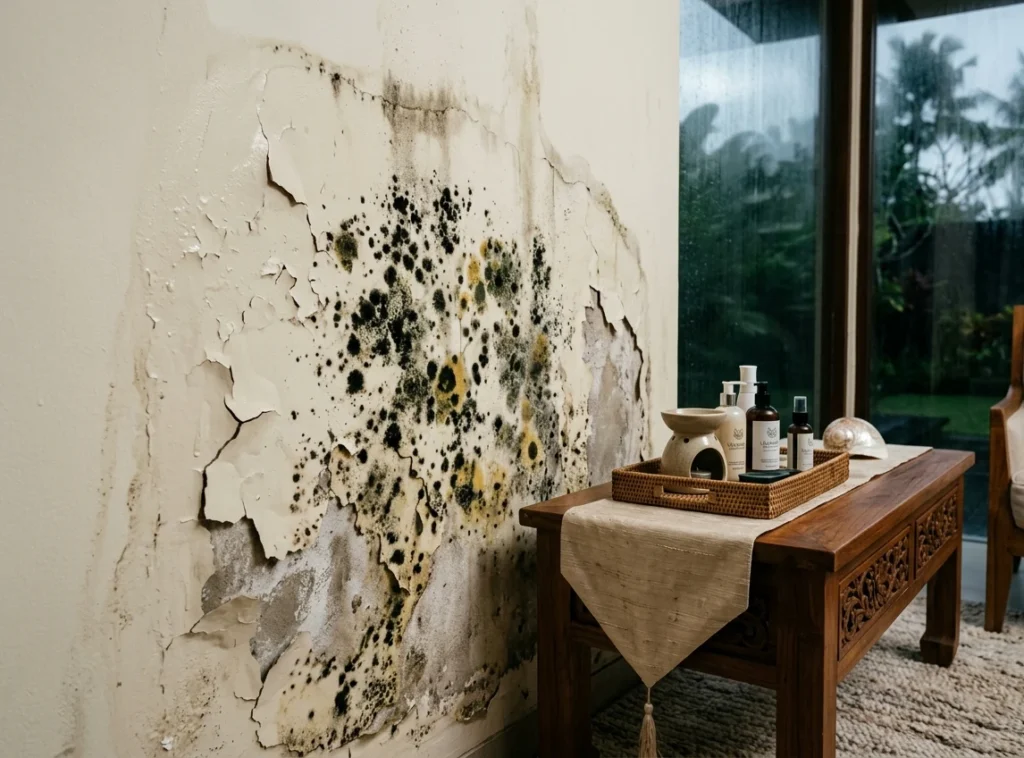
The Reality: High-quality luxury villas in Bali currently benchmark at IDR 10,000,000–15,000,000 per sqm ($630–$950 USD). During a project audit we conducted in Seseh last year, we found a villa quoted at IDR 7M/sqm that lacked proper steel reinforcement entirely. Cheap quotes are almost always a precursor to hidden cost escalations or structural cracks within 12 months. For a full breakdown of what drives construction costs in Bali, see our dedicated article: how much it costs to build a villa in Bali.
Red Flag #3 – Lack of Transparent Dual-Language Contracts
Indonesian Law No. 24/2009 requires contracts with local entities to be in Bahasa Indonesia. However, for foreign investors, a side-by-side English translation is non-negotiable for clarity and enforceability. If a builder resists detailed BoQ (Bill of Quantities) clauses, or avoids specifying penalty terms for construction delays, they are almost certainly planning to inflate costs mid-build.
Red Flag #4 – Demanding Massive Upfront Deposits (>30%)
Practitioner’s Tip: Many documented scams in Bali begin with a 50% “mobilization fee” that disappears within weeks. A standard, safe payment schedule used by professional firms follows this structure:
- Mobilization: 10–20%
- Milestone 1 – Foundation & Structure: 25%
- Milestone 2 – Roof & Walls: 25%
- Milestone 3 – Finishing & MEP: 20%
- Retention: 5–10% (held for 3–6 months post-handover to cover defects)
Red Flag #5 – Using “Borrowed” Portfolios
Social media is rife with stolen project images. We once met a client who had hired a builder based on photographs that actually belonged to a villa we built in Bingin. Verification: always request the physical address of at least one active construction site and visit unannounced. At ASA Group, we actively encourage prospective clients to walk through our ongoing and completed projects where you can observe our K3 safety standards and site management firsthand.
Red Flag #6 – Resistance to Soil Investigations (Sondir)
Bali’s soil profiles vary dramatically from the limestone cliffs of Uluwatu to the soft alluvial silt of Pererenan rice fields. Skipping a Sondir (cone penetration soil test) is the single most common technical cause of sinking or cracking villas. BMKG’s seismic activity records for Bali underscore why proper geotechnical assessment is mandatory in an active seismic zone. Any contractor who dismisses this step is guessing your foundation depth.
Red Flag #7 – No Warranty for Waterproofing & Structure
Bali’s monsoon season is the ultimate stress test for any build. Any contractor not offering a long maintenance period and a multi-year structural guarantee is not confident in their own engineering. Look specifically for multi-layer cementitious or bitumen waterproofing systems not a single surface coat of sealant.
Red Flag #8 – Vague Handling of Building Permits (PBG/SLF)
The PBG (Persetujuan Bangunan Gedung) replaced the old IMB in 2021 under Government Regulation No. 16/2021. If your builder says permits aren’t necessary for “private villas,” they are directly exposing you to government-ordered demolition or permanent closure of your rental business. Understanding Bali’s local zoning regulations is equally critical – our article on navigating Bali’s zoning laws for villa projects explains KDB (building coverage ratio) and related regulations in detail.
Red Flag #9 – Total Reliance on Sub-Contractors
If the “contractor” is purely a middleman with no in-house MEP engineers or a permanent civil engineering team, your quality control will vanish the moment a complex technical problem arises. A consistent, in-house team that understands the design from foundation to finishing is non-negotiable for a luxury build.
Red Flag #10 – Defensive Attitude Toward Independent QS Auditors
A professional builder genuinely welcomes a third-party Quality Surveyor (QS). If your prospective contractor becomes defensive or actively discourages independent inspections, they are almost certainly concealing sub-standard material choices, particularly in concrete mix ratios or steel reinforcement grades.
🔍 Thinking of hiring a contractor in Bali? Before signing any agreement, our team at ASA Group offers a free 30-minute consultation to help you vet your shortlisted builders, including us. We’ll walk you through how to verify NIB credentials, review a BoQ, and spot contract red flags.
See Our Services & Credentials → | Talk to an Expert on WhatsApp →
3. How to Hire a Villa Contractor in Bali (Step-by-Step)
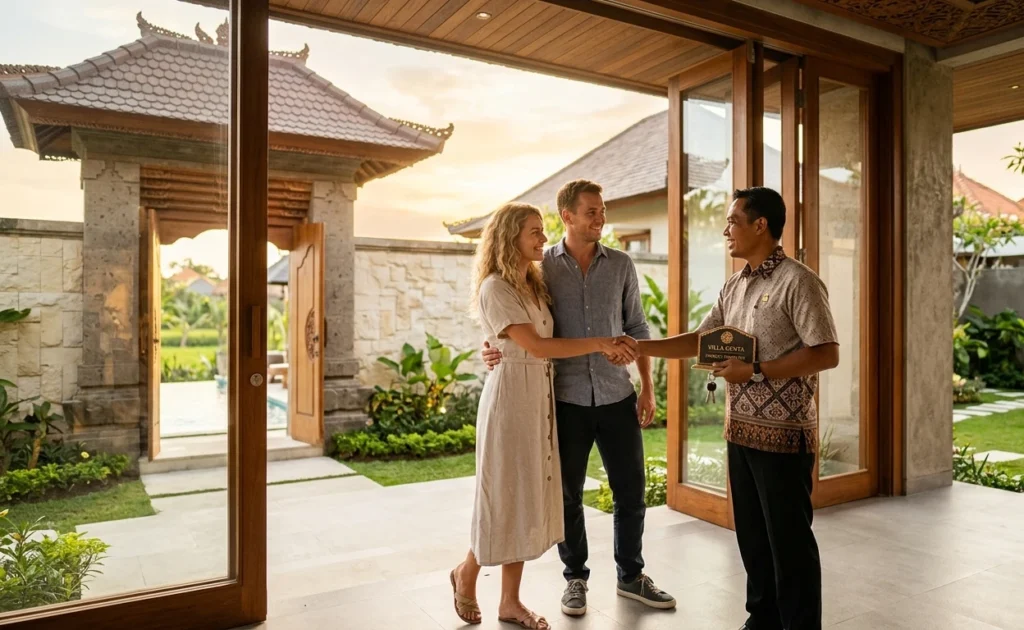
For a foreign investor, the hiring process should follow these stages in strict order to maximise legal protection and build quality:
- Legal Verification: Request the contractor’s NIB number and PT registration documents. Cross-check both via Indonesia’s OSS portal or instruct your legal counsel to perform a formal background check.
- BoQ Deep-Dive: Demand a full Bill of Quantities, every material, fixture, and bag of cement should be line-itemised with fixed unit prices. Vague lump-sum quotes are a non-starter.
- Site Visits: Inspect at least one completed project (ideally over 2 years old) and one active construction site. Look for K3 safety compliance, organised material storage, and clean concrete work.
- Third-Party QS Audit: Before signing, hire an independent Quality Surveyor to verify that contract pricing reflects actual market rates for materials and labour in Bali.
- Permit Confirmation: Confirm the contractor has a clear, written process for obtaining the PBG. Never break ground without a permit in hand.
- Contract Signing: Ensure the final contract is in both Bahasa Indonesia and English, includes milestone-based payment terms, and contains explicit penalty clauses for delays exceeding agreed timelines.
4. Remote Project Management: Building While You Are Away
The majority of our clients are based in Australia, Europe, or the United States. To bridge the 12,000 km gap and maintain genuine accountability during a 12–18 month build cycle, a professional contractor should provide:
- Weekly HD Reports: Full video walkthroughs and drone footage – not just a handful of static photos.
- Cloud-Based BoQ Tracking: Real-time access to actual spend versus your approved budget, line by line.
- On-Site Progress Cameras: 24/7 live access to your construction site.
- Monthly Financial Reconciliation: A formal report comparing all expenditures against the original BoQ.
This level of transparency is especially important given the common pitfalls facing foreign investors. Our article on Bali property investment pitfalls covers the financial and legal risks that extend well beyond the construction phase.
5. Villa Construction Cost Breakdown
The following benchmarks are based on recent projects completed by ASA Group across South Bali. All figures exclude land acquisition, PBG permit fees, and professional design fees.
| Category | IDR / Sqm | USD / Sqm (Approx.) | Key Features |
| Mid-Range | IDR 9M – 11M | $570 – $700 | Local stone, quality tile, standard MEP |
| Luxury | IDR 12M – 16M | $760 – $1,010 | Marble, Teak, Smart Home, Premium MEP |
| Ultra-Luxury | IDR 18M+ | $1,150+ | Imported finishes, bespoke engineering, infinity glass |
USD conversions are approximate at IDR 15,800/USD. Prices are indicative and subject to design complexity, site access, and material availability.
For the most current and detailed cost analysis, including land, permits, design fees, and furnishing. Read our dedicated guide: complete cost to build a villa in Bali (2026).
Want a custom estimate for your specific project? Request a detailed BoQ from our team →
6. 5 Critical Questions to Ask Before You Sign
Before committing to any contractor, ask these five questions directly. The quality and confidence of the answers will tell you everything you need to know.
A legitimate contractor provides these immediately and without hesitation.
Listen for multi-layer bitumen or cementitious systems. A single-coat answer is a red flag.
If the answer involves any form of approximation or lump-sum grouping, walk away.
References older than two years will have experienced the full post-construction reality: roof leaks, MEP failures, and structural settling.
This reveals both regulatory competence and contract management maturity.
At ASA Group, we answer all five of these questions upfront – see how we work and what we stand behind.
7. FAQ: Building Permits, Legalities & Scams in Bali
PBG (Persetujuan Bangunan Gedung) is the mandatory building permit in Indonesia, replacing the old IMB since 2021 under Government Regulation No. 16/2021. It confirms that a building complies with local zoning (KDB), technical safety standards, and environmental regulations. Building without a valid PBG exposes you to government-ordered demolition and permanent loss of your short-term rental licence.
Go to Indonesia’s OSS (Online Single Submission) portal at oss.go.id, enter the contractor’s NIB number, and verify their PT registration status and business scope. Any fully licensed contractor will provide this number without hesitation. If they deflect or offer excuses, treat it as a critical disqualifying red flag.
A fair mobilisation fee is between 10% and 20% of the total contract value. Any request for 40–50% upfront, before significant structural work has been completed — is a major warning sign for both your cash security and the contractor’s financial management capability. All subsequent payments should be tied strictly to verified construction milestones.
Yes, provided your contractor has a documented “Rainy Season Plan” that sequences roofing and waterproofing works ahead of peak rainfall months. At ASA Group, we schedule heavy structural pours outside January–February and pre-install temporary protective roofing membranes for all ongoing projects during the wet season.
A contractor builds to your design, on land you control, under a contract you own. A developer sells you a finished or off-plan product under their legal entity and ownership structure. For foreign investors who already hold a lease (Hak Sewa) or Right to Use (Hak Pakai), hiring an experienced contractor gives you full design control, cost transparency, and legal clarity. See our full guide on how foreigners can legally own property in Bali for details on choosing the right ownership structure.
Yes. Professional contractors provide weekly HD video walkthroughs, drone footage, cloud-based BoQ spend tracking, and on-site cameras for 24/7 progress monitoring. ASA Group currently manages active builds for clients across 12 countries. The key is establishing weekly video check-ins and milestone-triggered payment releases before construction ever begins.
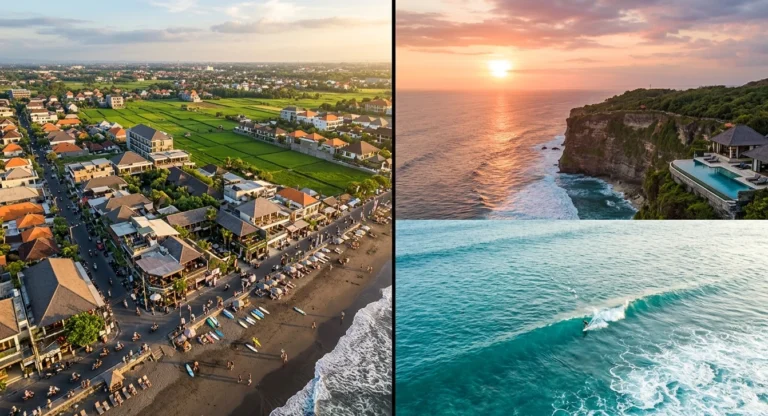
The highest-performing locations currently are Canggu/Pererenan (surf culture, high short-term rental demand), Uluwatu (clifftop premium positioning), Seminyak (mature luxury market), and Ubud (wellness tourism growth). Each area carries different soil conditions, zoning restrictions, and construction cost premiums. Our article on top locations for profitable villa investment in Bali provides a current area-by-area breakdown. Before committing capital, also read our analysis of Bali villa investment risks and opportunities.
Ready to Build in Bali Without the Red Flags?
ASA Group Indonesia has completed 450+ projects across Bali and beyond since 2017. With full PT registration, transparent BoQ pricing, dual-language contracts, and end-to-end PBG compliance. Our clients build from 12 countries. We can manage your project too.