


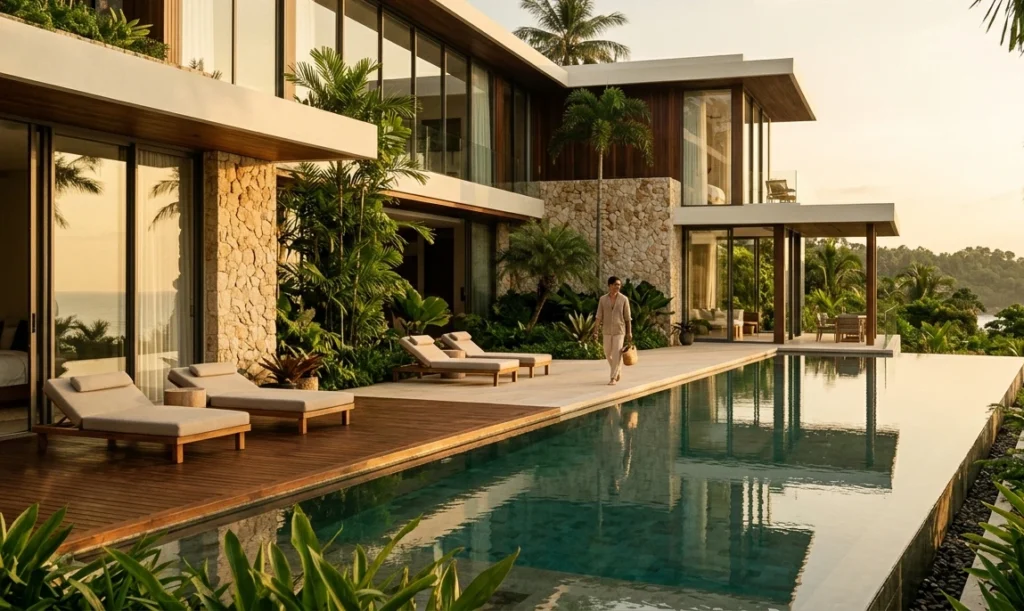
Last updated: March 2026 | Authored by the Project Development Team at ASA Group Indonesia
Imagine waking up to the sound of tropical birds in your private sanctuary in Ubud, or watching the sunset from a rooftop lounge in the heart of Canggu. For many global investors, Bali isn’t just a holiday destination, it is a sophisticated real estate playground. However, once you decide to commit capital, you inevitably face a fundamental crossroads: should you buy a turnkey villa or build your own from the ground up?
This decision is rarely just about the price tag; it is about balancing your liquidity, your patience, and your long-term vision for ROI. At ASA Group Indonesia, having overseen more than 30 successful developments across the island, we’ve seen that this choice often dictates the difference between a “good” investment and a “legacy-building” one. While building typically unlocks 20–35% higher instant equity, buying offers the undeniable allure of immediate rental income.
Before choosing either path, it’s worth understanding the full landscape of Bali villa investment risks and opportunities that affect both strategies. To help you navigate this high-stakes landscape, let’s dive deep into the financial, legal, and operational realities of the Bali property market.
1. Buying a Villa in Bali: Speed, Convenience, and Hidden Realities
Buying a pre-built villa is the fastest way to join Bali’s booming short-term rental economy. In high-demand hotspots like Pererenan and Uluwatu, “ready-to-move-in” properties are currently the crown jewels of the secondary market, often selling before they even reach public listings.
Why Investors Choose Turnkey Properties
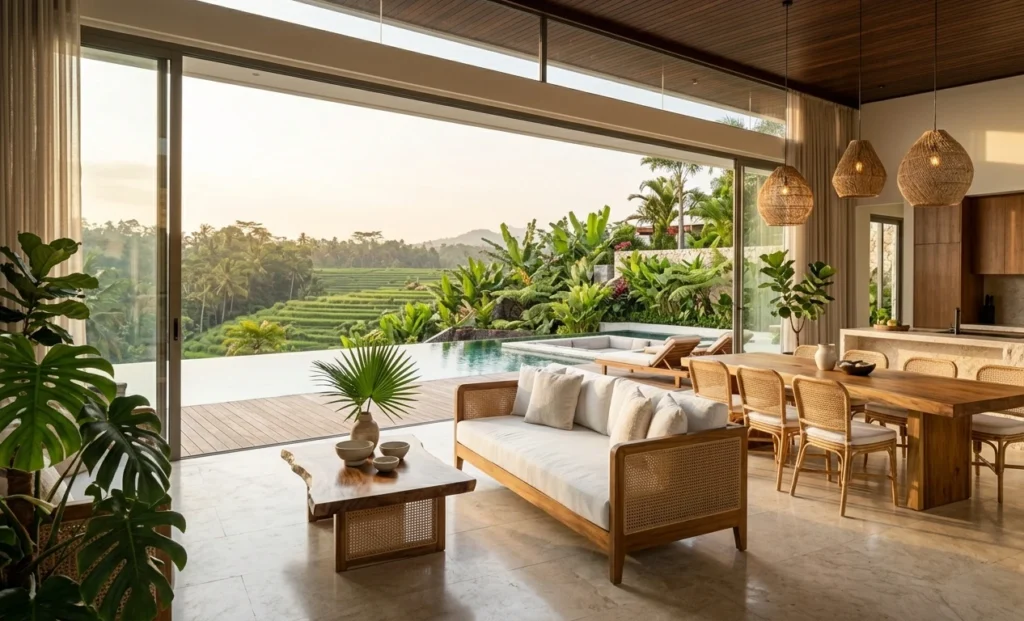
The primary driver here is immediacy. You can begin generating daily rental yields via Airbnb’s short-term rental platform or high-end management firms almost immediately after the notary handover. Furthermore, an existing villa often comes with a “track record” you can audit past occupancy rates and net profits, which significantly reduces the guesswork involved in your financial projections.
The Risk Behind the Facade
However, speed often comes with a hidden cost. Many villas built during the pre-2020 construction boom lack the modern structural safeguards required for Bali’s tropical climate. Our structural audit team has found that nearly 40% of older villas suffer from “The Bali Damp” rising humidity and poor foundation sealing hidden behind a fresh coat of paint. Understanding the common pitfalls of buying Bali property before signing any agreement can save you hundreds of thousands of dollars.
Additionally, aesthetics evolve rapidly; the dark-wood Joglo styles that dominated a decade ago are slowly losing ground to the high-demand “Biophilic” and “Mediterranean-Tropical” designs that today’s luxury travelers crave.
2. Building Your Own Villa in Bali: Crafting Equity and Excellence
If buying is about speed, building is about wealth creation. By taking on the role of the developer yourself, you essentially capture the profit margin that would otherwise go to a third party.
The Financial Advantage of “Day One Equity”
As of 2026, high-quality construction in Bali costs between $1,000 and $1,350 per m² for luxury finishes. For a full detailed cost breakdown for building a villa in Bali, including pool, landscaping, and permit fees, see our dedicated cost guide. When you strategically combine these build costs with a 25–30 year leasehold, your total investment is often 30% below the market valuation of a finished villa. This “instant equity” provides a massive safety net and a significant head start on your total ROI.
Engineering for the Tropics
Beyond the financials, building allows you to control the “invisible” quality of your home. Modern tourists, often paying upwards of $300 per night, expect more than just a pool; they want energy-efficient double-glazed windows, integrated solar power, and professional-grade ventilation systems. By building new, you ensure these features are part of the villa’s DNA, rather than expensive, low-quality retrofits. Market conditions in 2024 and beyond further support this approach, here’s why now is the optimal time to build in Bali.
For a detailed walkthrough of the entire process from land acquisition to final snagging, read our complete step-by-step guide to building a villa in Bali.
3. The Off-Plan Investment Alternative: A Strategic Middle Ground
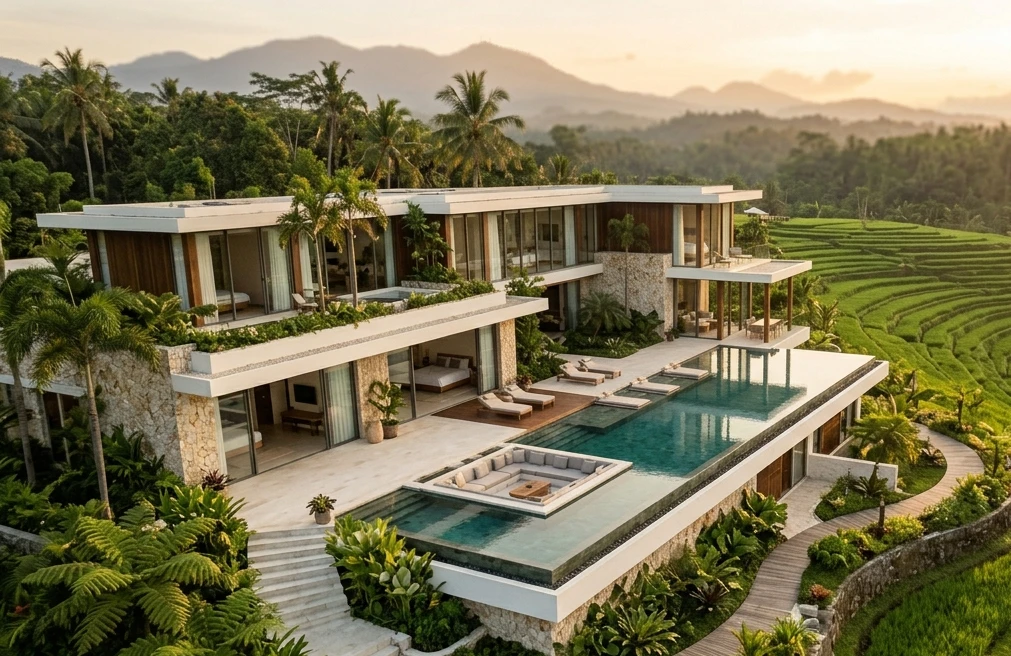
For those who want the “new build” quality but lack the time to manage a custom project, Off-Plan Investment has emerged as a powerful third option. By purchasing a villa from a developer before or during construction, you typically secure a “pre-launch” price that is 10–15% cheaper than the final market value.
This approach is not without risk. The most critical factor is the developer’s track record, delays of 6–12 months beyond the agreed timeline are common with less experienced firms, and in worst-case scenarios, undercapitalized developers can halt construction entirely. Always verify a developer’s completed portfolio, escrow arrangements, and PBG permit status before committing capital. That said, when executed with a reputable partner, off-plan investing offers a balanced path between lower costs, modern design, and reduced day-to-day management burden compared to a fully custom build.
4. ROI by Location: Where Should You Build or Buy in Bali?
Not all areas in Bali offer the same returns. A high-yield area today might be saturated tomorrow. Below is a breakdown of projected returns based on land appreciation and rental demand. For a deeper analysis of each area’s micro-market dynamics, read our guide to the top locations for a profitable villa in Bali.
| Area | Estimated Net Yield | Capital Appreciation | Target Audience |
| Canggu / Berawa | 10% – 13% | High (Mature) | Digital Nomads, High-end Tourists |
| Uluwatu / Bingin | 12% – 15% | Very High (Booming) | Surfers, Luxury Seekers, Event Travelers |
| Ubud | 8% – 11% | Moderate | Wellness Seekers, Long-term Expats |
| Kedungu / Tabanan | 9% – 14% | Maximum (Emerging) | Nature Lovers, Value Investors |
Note: Emerging areas like Kedungu offer lower entry costs for land, significantly increasing the potential for capital gains over a 5–10 year horizon.
5. Measuring the Financial Impact: A 5-Year Comparative Outlook
The table below compares key investment metrics based on ASA Group’s 2024 project data and regional market reports from Colliers Indonesia and Knight Frank Asia-Pacific.
| Investment Metric | Buying Ready-Made (Secondary) | Building New (ASA Group Project) |
| Initial Capital Outlay | $500,000 | $340,000 (Land + Build) |
| Time to Market | 1 Month | 12 – 14 Months |
| Instant Equity Gain | 0% | 25% – 35% |
| Est. Net Annual Yield | 8% – 10% | 12% – 16% |
| Maintenance Reserve | 3–5% of revenue | 1–2% of revenue (Warranty) |
Data Source: Internal ASA Group Market Analysis, BPS Bali Tourism Statistics, and Colliers Indonesia Regional Reports.
6. Property Management: Maximizing Your Net Yield
Building or buying the villa is only half the battle. Your net ROI is ultimately determined by how the property is managed.
In Bali, a standard Property Management Fee ranges from 15% to 22% of gross revenue. This typically covers:
- Marketing & Channel Management: Listing on Airbnb, Booking.com, and direct booking engines.
- Staffing: On-site villa managers, housekeeping, and security.
- Accounting: Transparent monthly reporting on expenses and income.
Investing in a high-quality property manager ensures that your occupancy rates stay above the island average of 65% (based on BPS Bali Tourism Statistics), directly impacting your ability to reach a 15%+ annual net yield.
7. Navigating the Legal and Operational Maze in Bali
Regardless of which path you choose, success in Bali is built on a foundation of legal compliance.
Ownership Structures for Foreigners
Foreigners typically navigate the market through Leasehold (Hak Sewa) or Hak Pakai (Right to Use). For serious commercial investors, establishing a PT PMA (Foreign-owned company) to hold HGB (Right to Build) titles remains the gold standard for long-term security. For a full breakdown of each structure, its protections, and its limitations, read our complete legal guide for foreigners owning property in Bali. All land title matters are ultimately governed by the Indonesian Ministry of Agrarian Affairs (ATR/BPN), which is the authoritative source for verifying any land certificate in Indonesia.
Tax Obligations and Hidden Costs of Entry
It is crucial to budget for the costs that many buyers overlook:
- Notary Fees: Generally 1% of the transaction value.
- Transfer Tax (BPHTB): 5% of the transaction value, payable by the buyer.
- Zonasi Matters: You can only legally operate a rental villa for tourism in the “Tourism Zone” (Zona Merah). Building on Green Zone land is a recipe for legal disaster and potential demolition. Before purchasing any land, read our detailed guide on navigating Bali’s zoning laws for your villa project.
8. The Journey to Completion: What to Expect When Building
If you choose to build, you are embarking on a 12-to-15 month journey. Understanding each phase helps you plan your capital deployment and manage expectations.
Phase 1: Due Diligence (Week 1–4)
Rigorous verification of land certificates, zoning status, and encumbrances. This is the most critical phase a flawed due diligence is the root cause of most failed Bali property investments.
Phase 2: Design & Architecture (Month 2–3)
Finalizing 3D renders, structural engineering drawings, and interior specifications with your architect. The design decisions made here will directly determine your property’s rental appeal and long-term maintenance costs.
Phase 3: Permitting / PBG (Month 3–5)
Navigating Indonesia’s increasingly digital PBG (Building Permit) system. Processing times vary significantly by regency, budget 6 to 10 weeks minimum. Operating without a valid PBG exposes your investment to forced demolition.
Phase 4: Main Construction (Month 5–14)
The physical build, including foundation, structure, roofing, MEP (mechanical, electrical, plumbing), and finishing. This is where quality control is non-negotiable, weekly site inspections and transparent reporting are essential.
Phase 5: Snagging & Handover (Final 2–4 Weeks)
A systematic room-by-room quality inspection against the agreed specifications, followed by final photography, listing preparation, and key handover.
9. Frequently Asked Questions (FAQ)
Foreigners cannot hold Hak Milik (freehold title) personally under Indonesian law. However, they can legally control property through long-term Leasehold (Hak Sewa, typically 25–30 years), Hak Pakai (Right to Use), or by establishing a PT PMA (Foreign-Owned Company) to hold an HGB title. All of these structures are recognized and enforceable under Indonesian law when properly notarized.
Yes, building is highly profitable if you have an 18–24 month horizon for planning and construction. By acting as the developer, you capture a 20–35% profit margin that you would otherwise pay to a seller. This instant equity acts as a significant financial buffer against market fluctuations and delivers a superior long-term ROI compared to a secondary market purchase.
As of 2026, construction costs for a high-quality 3-bedroom villa (approx. 200m² build size) range from $180,000 to $240,000, excluding land costs. This assumes a luxury finish including a private pool and landscaping. See our full detailed cost breakdown for building a villa in Bali for a line-by-line budget matrix.
For individual investors, a long-term Leasehold (Hak Sewa) is the simplest entry point. However, for those building a portfolio of multiple units or seeking stronger legal protection, establishing a PT PMA is recommended, as it provides the ability to hold HGB titles and apply for a KITAS (residency permit). Consult our foreigner property ownership guide and always engage a licensed Indonesian notary before committing.
Zona Merah (Red Zone / Tourism Zone) is land officially designated for tourist accommodation under Bali’s spatial planning regulations. Operating a rental villa here is the only way to legally obtain a NIB (Business Registration Number) via Indonesia’s OSS system and avoid heavy fines or property closure by local authorities. Building a rental villa on Green Zone (agricultural) land, regardless of what a seller tells you, carries the risk of demolition orders.
The primary risks include contractors exceeding the agreed budget, poor structural engineering leading to dampness and cracking within 2–3 years, and delays in the PBG permit process. A secondary but significant risk is purchasing land with unclear title or incorrect zoning. Understanding these Bali property investment pitfalls before you begin is essential. Working with an experienced project management firm that offers fixed-price contracts and western-standard quality control mitigates the majority of these risks.
Conclusion: Defining Your Bali Legacy
Ultimately, the choice between building or buying a villa in Bali is a choice between Speed and Wealth.
Buy if you want a hassle-free entry into the market and immediate rental income to fund your lifestyle. Build if you are a strategic investor who wants to maximize every dollar, secure a 25–35% equity gain from day one, and own a property that truly stands out in a competitive luxury market.
With over 50,000 m² of premium real estate overseen by our team, ASA Group Indonesia is ready to be your trusted Bali villa contractor from the first blueprint to the final key handover, built on international standards and protected for the decades to come.
Ready to see the numbers for your specific vision? schedule a consultation with our project team today.
Disclaimer: This article is for informational purposes only and does not constitute legal or financial advice. Always consult with a licensed Indonesian notary and qualified tax advisor before making a property investment decision.