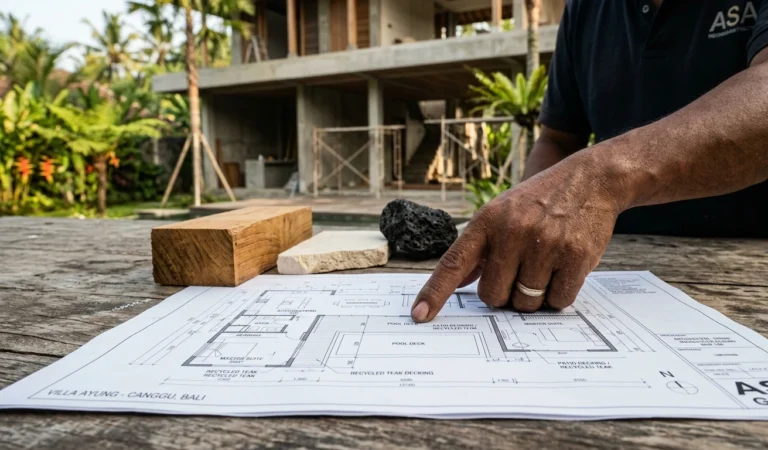



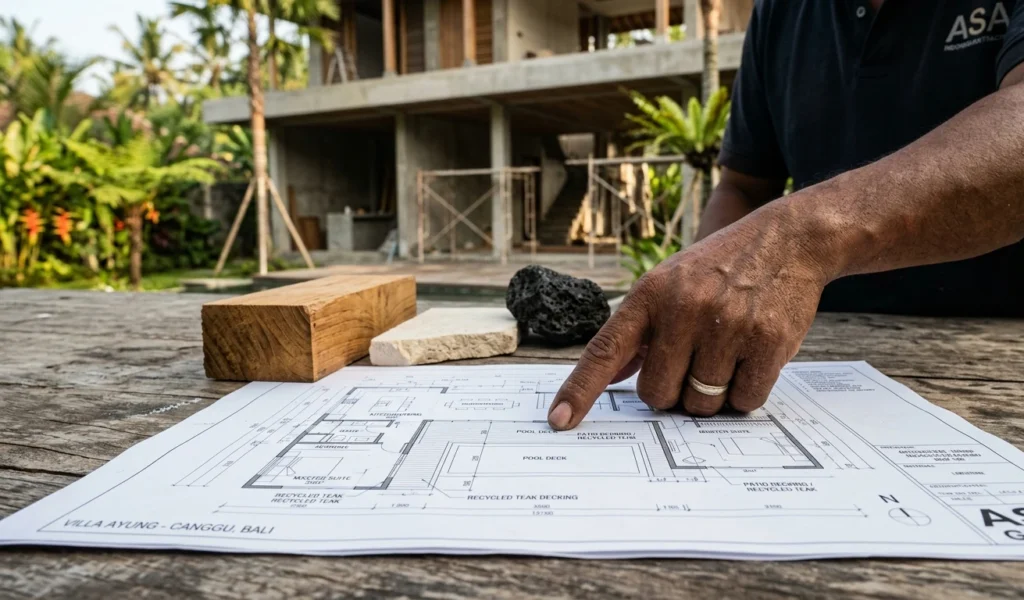
By ASA Group Indonesia | Bali Villa Contractor & Developer | Last Updated: 2026
Reading time: 12 minutes
Quick Answer: For most foreign investors, Leasehold (Hak Sewa) is the most accessible and highest-ROI route to Bali property investment, especially for rental villa development. Freehold (Hak Milik) is legally restricted to Indonesian citizens, but foreigners can access permanent-like ownership through a PT PMA (HGB title). Your choice ultimately depends on your investment timeline, capital capacity, and long-term goals.
Bali’s property market continues to attract global investors at an unprecedented rate. According to Knight Frank’s 2026 Asia-Pacific Outlook, Bali ranks among the top three luxury real estate markets in Southeast Asia by price growth. With appreciation rates in prime areas consistently ranging from 10–20% annually and rental yields outperforming Singapore and Hong Kong, the question is no longer whether to invest, but how.
The single most important decision you will make as a foreign investor entering the Bali property market is choosing between Leasehold and Freehold. Get this wrong, and no amount of good construction or good location will protect your investment.
At ASA Group Indonesia, we have spent years on the ground building villas in Bali across Canggu, Uluwatu, Seminyak, and Pererenan. We have watched investors succeed and fail, and the difference almost always comes down to how well they understood the title structure before signing anything. This guide is the same framework we share with every client before breaking ground.
What Is the Core Difference Between Leasehold and Freehold in Bali?

Under Indonesian law, property ownership is governed by Undang-Undang Pokok Agraria (UUPA) No. 5 Tahun 1960, the Basic Agrarian Law. This law establishes several distinct land title categories, each with different rights, durations, and eligibility rules.
The two titles most relevant to investors are:
Freehold, Hak Milik (Right of Ownership) The strongest land title in Indonesia, granting permanent, unconditional ownership with no expiration date. However, under UUPA, Hak Milik is exclusively available to Indonesian citizens (Warga Negara Indonesia/WNI). Foreign nationals cannot hold this title directly.
Leasehold, Hak Sewa (Right to Lease) A legally binding, time-bound agreement granting a foreign party the exclusive right to use, develop, and commercially exploit land for a defined period, typically 25 to 30 years, with extension options pre-agreed in the contract. This is the most common vehicle for foreign property investment in Bali.
There is a third option that many articles overlook, which is critically important for foreigners:
Hak Pakai (Right to Use) This title allows foreign nationals holding a valid KITAS or KITAP (Indonesian residency permit) to own a property, typically a house or villa, on government or state land, for up to 30 years with renewal. It is more restrictive than Leasehold in practice but is a legitimate ownership path for expats with legal residency status. You can learn more about Bali’s zoning and permit requirements in our guide on navigating zoning laws for your villa project.
Freehold (Hak Milik) in Bali: What Foreign Investors Need to Know
Can Foreigners Own Freehold Property in Bali?
Directly? No. But there is a legal and structured way to access permanent land rights as a foreign entity.
The PT PMA Route (Foreign-Owned Company)
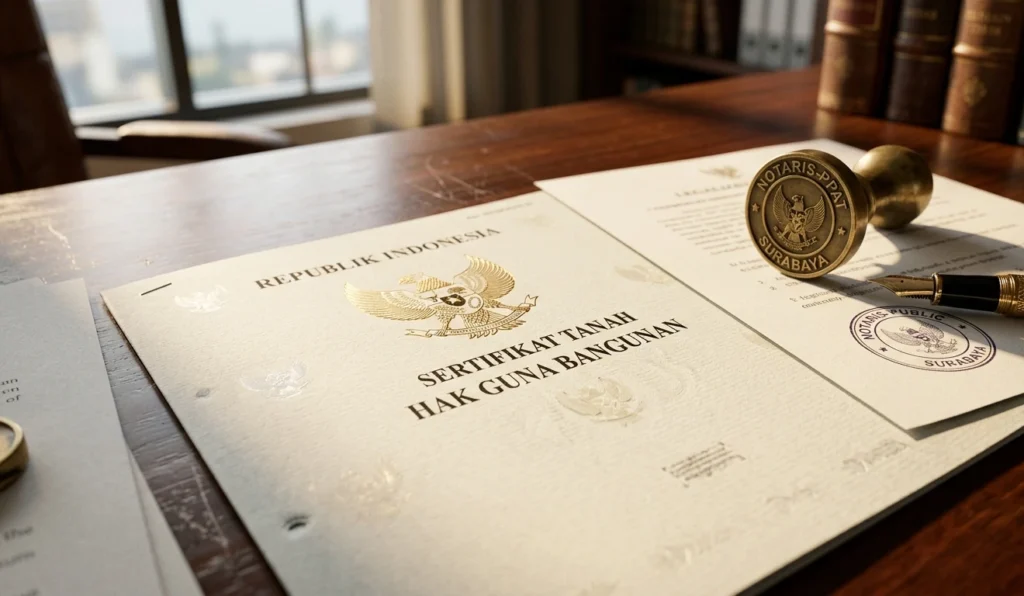
A PT PMA (Perseroan Terbatas Penanaman Modal Asing) is a foreign-owned limited liability company registered under Indonesian law. When a PT PMA acquires land, it holds the title as Hak Guna Bangunan (HGB), the Right to Build, which grants:
- An initial period of 30 years
- A first extension of 20 years
- A second extension of 30 years
This totals up to 80 years of controlled land rights, functionally similar to freehold for most investment horizons. According to the Indonesian Investment Coordinating Board (BKPM), establishing a PT PMA typically requires a minimum authorized capital of IDR 10 billion (approximately USD 625,000), though the paid-up capital requirement is lower in practice.
Benefits of Freehold/HGB (PT PMA) Investment
Long-term capital appreciation with no expiry clock. Prime land in Seminyak, Pererenan, and Berawa rarely depreciates. An 80-year HGB title means you capture the full trajectory of Bali’s land value growth without the residual value decline that affects leasehold properties as their term shortens.
Bankability. HGB titles held by a PT PMA are recognized as collateral by Indonesian banks, opening access to local financing that is unavailable to pure leasehold holders.
Legacy and inheritance. A PT PMA structure allows the investment to be passed down through corporate shareholding, enabling family wealth transfer across generations.
The Nominee Risk: Why You Must Avoid It
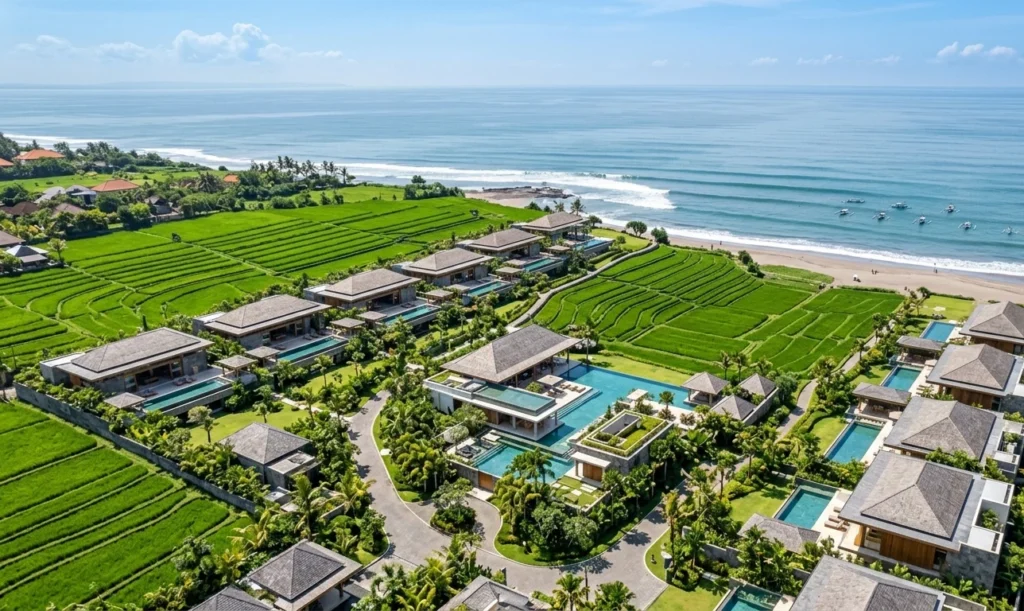
Historically, many foreigners used Nominee Agreements, registering Hak Milik land under an Indonesian citizen’s name while retaining control through a side agreement. This practice is not only legally unenforceable but is also increasingly prosecuted under Indonesian law. Indonesian courts consistently rule that the actual ownership belongs to the WNI nominee, leaving the foreign “investor” with no legal recourse. If you are currently using a nominee structure, consult a licensed PPAT (notaris) immediately. See our companion guide on common Bali property investment pitfalls to avoid.
Leasehold (Hak Sewa) in Bali: The Smart Entry Point for Most Investors
How Leasehold Works in Practice
A standard leasehold transaction in Bali today works as follows:
- The foreign investor and the Indonesian landowner (or their representative) sign a Perjanjian Sewa (Lease Agreement) before a licensed notaris/PPAT.
- The agreement specifies: the lease period (typically 25–30 years), the total lease price paid upfront, extension terms, and what happens to any structures at the end of the lease.
- The investor receives the right to use, develop, sublease, and profit from the property throughout the lease term.
- Extension options are ideally pre-agreed at a fixed price or a formula (e.g., pegged to 3 nearby comparable land sales), avoiding renegotiation leverage for the landowner at renewal.
Why Leasehold Often Delivers Higher ROI
From a cash-flow perspective, leasehold frequently outperforms freehold for the following reasons:
Lower capital outlay, higher leverage. A leasehold in Canggu typically costs 30–50% less than the equivalent freehold price. The capital saved can be redirected into higher-quality construction, professional interior design, or a second property, multiplying your rental income capacity.
Same rental income, lower cost basis. A beautifully built 3-bedroom villa on leasehold land commands the same nightly rate on Airbnb or Booking.com as an identical villa on freehold land. Guests do not care about the title, they care about the pool, the design, and the location.
Faster ROI. Based on our project experience at ASA Group, a well-built and professionally managed leasehold villa in a prime Bali location typically reaches its break-even point within 6 to 8 years at a 70% occupancy rate. Everything after that is profit, and you still have 17–22 years of lease remaining to maximize.
Speed and simplicity. A leasehold transaction typically completes in 4–8 weeks. Establishing a PT PMA for an HGB acquisition can take 3–6 months and involves ongoing corporate compliance costs.
If you are planning to build, read our complete guide: How to Build a Villa in Bali: A Comprehensive Guide for Foreigners and Investors.
Leasehold vs Freehold Bali: Head-to-Head Comparison
| Feature | Leasehold (Hak Sewa) | Freehold via PT PMA (HGB) |
| Available to foreigners? | ✅ Yes, directly | ✅ Yes, via PT PMA |
| Duration | 25–35 years (extendable) | Up to 80 years |
| Entry cost | 30–50% of freehold price | Full market value + PT PMA setup |
| Setup complexity | Low (notaris agreement) | High (corporate registration) |
| Ongoing compliance | Minimal | Annual corporate reporting + taxes |
| Rental income potential | Equal to freehold | Equal to leasehold |
| ROI timeline | 6–8 years | 10–15 years |
| Resale value trend | Declines as term shortens | Appreciates with market |
| Inheritance/legacy | Limited (lease transfer) | Full (via share transfer) |
| Legal risk | Low (if contract is solid) | Low (if PT PMA is properly set up) |
| Best for | Rental yield, short-medium horizon | Legacy, capital preservation, long horizon |
Financial Deep Dive: ROI Calculator Framework
Leasehold Investment Example (Canggu, 3BR Villa)
| Item | Amount (USD) |
| Land lease (25 years) | $150,000 |
| Villa construction (250m², high-spec) | $200,000 |
| Furniture, fit-out, pool | $50,000 |
| Total Investment | $400,000 |
| Average nightly rate | $350/night |
| Annual occupancy (70%) | 256 nights |
| Gross annual revenue | $89,600 |
| Operating costs (30%) | $26,880 |
| Net annual income | $62,720 |
| Break-even point | ~6.4 years |
After break-even, the remaining 18+ years of the lease generates pure cash flow. Even accounting for land appreciation not belonging to the leaseholder, the cash-on-cash return of leasehold typically outperforms HGB/freehold over the first 15 years.
Critical note on construction quality: The residual value of a leasehold property, the price you can sell the remaining lease for, is almost entirely determined by the quality of the building. A villa with structural issues by year 8 is nearly impossible to sell. This is why your choice of contractor is as important as your choice of title. View our completed villa projects to see the build standard we maintain across every engagement.
Critical Pitfalls: What Can Destroy Your Bali Property Investment
1. Zoning Violations (ITR/Tata Ruang)
Before signing any lease or purchase agreement, verify the land’s Informasi Tata Ruang (ITR), Bali’s spatial planning document. Key zones to understand:
- Zona Pariwisata (Tourism Zone): Suitable for villa development and short-term rental.
- Zona Permukiman (Residential Zone): Villa development permitted, but short-term rental licensing is more restricted.
- Zona Pertanian/Hijau (Agricultural/Green Zone): No building permitted. Land in this zone cannot receive a PBG (Building Permit). Many foreigners have paid lease prices for green zone land only to discover they cannot legally build. Read our dedicated guide on Bali zoning laws and villa project navigation for a full breakdown.
2. Weak Extension Clauses
The most dangerous moment in a leasehold investment is renewal time. If your lease agreement does not specify a clear, fair formula for extension pricing, the landowner has full leverage. A professional lease should include either:
- A fixed extension price agreed today, or
- A price formula based on the average of 3 independently appraised comparable parcels.
3. Title Verification Gaps
Always instruct your PPAT/notaris to:
- Verify the land certificate at the BPN (Badan Pertanahan Nasional) office.
- Check for encumbrances (mortgages, liens, or disputes).
- Confirm there are no inheritance disputes among the landowner’s family.
- Verify that the person signing the lease has full authority to do so (especially for inherited land with multiple heirs).
4. Building Without a PBG
Since the replacement of IMB with PBG (Persetujuan Bangunan Gedung) under Government Regulation No. 16/2021, building without the correct permit creates compounding legal risk. At ASA Group, we manage the full PBG application process for every project we build, ensuring compliance from foundation to finishing. Learn more about the optimal timing for starting your Bali villa construction.
How to Choose the Right Structure for Your Profile
Choose Leasehold (Hak Sewa) if:
- You are a foreign individual without Indonesian residency (KITAS/KITAP)
- Your primary goal is rental yield and cash flow within a 5–15 year horizon
- You want to minimize setup complexity and start generating income quickly
- Your capital budget is under $500,000 and you want to maximize deployment
Choose Freehold via PT PMA (HGB) if:
- You are investing for the long term (20+ years) or building a family legacy
- You have significant capital and want to capture full land appreciation
- You plan to develop multiple properties or a commercial project
- You want access to Indonesian bank financing using the property as collateral
Consider Hak Pakai if:
- You hold a valid KITAS or KITAP (Indonesian residency permit)
- You intend to use the property as your primary residence, not for short-term rental
- You want a simpler legal structure than PT PMA without the leasehold time pressure
The Role of Your Contractor in Title Value Preservation
Regardless of which title structure you choose, the value of your investment is ultimately carried by the quality of what you build.
In Bali’s tropical environment, high humidity, intense UV exposure, intense rainfall, and seismic activity, construction demands expertise that goes well beyond standard practices. Specifically:
Waterproofing is the single most common failure point in Bali villas. Inadequate waterproofing on roofs, wet areas, and basement structures leads to mold, structural degradation, and costly remediation that destroys resale value.
Foundation design varies significantly by location. Rice field plots (sawah) require deep pile foundations that are often underspecified by less experienced contractors. A structurally compromised villa by year 7 of a 25-year lease has essentially zero residual value.
Material selection matters for longevity. Natural stone, tropical hardwood, and marine-grade finishes hold up under Bali’s climate. Budget materials that look great on day one often deteriorate dramatically by year 3–5.
At ASA Group, every villa we build in Bali is designed to retain maximum residual value through the full lease term. We partner with our clients not just as a contractor, but as an investment partner who understands that your building is your yield-generating asset. Explore our portfolio of completed projects to see how this commitment translates to finished results.
Frequently Asked Questions: Leasehold vs Freehold Bali
Not directly. Under Indonesian law (UUPA), Hak Milik (freehold) is exclusively available to Indonesian citizens. Foreign nationals can access permanent-like land rights through a PT PMA
Unless a lease extension has been signed, all structures built on the land revert to the landowner at zero compensation. This is why negotiating your extension clause, before signing the original lease is important.
Yes, particularly for holiday villa rental. Most premium villa rental businesses in Bali operate on leasehold land.
Setting up a PT PMA in Indonesia typically costs between IDR 15–30 million (approx. USD 900–1,800) in notarial and government fees, plus ongoing annual accounting and tax compliance costs. The minimum authorized capital is IDR 10 billion.
Leasehold: Subject to a Final Income Tax (PPh Final) of 10% on the total lease value, typically paid by the landowner. Freehold/HGB acquisition via PT PMA: Subject to BPHTB (Land and Building Acquisition Tax) at 5% of the transaction value.
Hak Sewa is a lease agreement between private parties, you lease from an individual or entity. Hak Pakai is a government-recognized title granted to foreign individuals with legal Indonesian residency (KITAS/KITAP), conferring a right to use specific property types for up to 30 years.
Yes. A leasehold property can be sold (the remaining lease transferred) at any time during the lease term.
Financial models at ASA Group consistently show that a minimum 25-year initial lease is required to achieve meaningful ROI after break-even.
For pure leasehold, no, you can sign a lease agreement directly as a foreign individual. For PT PMA structures, Indonesian law allows 100% foreign ownership in certain sectors (including property development for sale).
As of 2025, Canggu, Pererenan, and Uluwatu consistently deliver the strongest rental yields due to high tourist demand, premium nightly rates, and relatively lower land lease costs compared to Seminyak/Kerobokan. Emerging areas like Seseh and Kedungu are attracting early-mover investors seeking longer leases at lower prices. See our guide on why now is the optimal time to build in Bali for current market context.
Conclusion: Making the Decision That’s Right for You
The Leasehold vs Freehold debate in Bali is ultimately a question of investor profile, not a universal answer.
If you are a foreign individual seeking maximum rental yield, a faster return on capital, and a streamlined entry process, Leasehold is your optimal vehicle, provided your lease contract is properly structured by a qualified PPAT and your villa is built to the standard that sustains residual value throughout the term.
If you are building a multi-decade legacy, have the capital for PT PMA structure and compliance, and want to capture Bali’s long-term land appreciation story, Freehold via HGB (PT PMA) is the right path.
In either case, your investment lives or dies on two things: the quality of your legal contract, and the quality of your construction. At ASA Group Indonesia, we handle the second part, and we help you ask the right questions about the first.
If you are ready to explore what building your Bali villa looks like in practice, contact our team here or browse our project portfolio to see the standard we build to.
External references: Knight Frank Asia-Pacific Outlook 2026 | Indonesian Investment Coordinating Board (BKPM) | BPN – Badan Pertanahan Nasional | Government Regulation No. 16/2021 on PBG